

More than 20 Indigenous-led stewardship projects are underway along British Columbia’s coastline, tackling everything from kelp restoration and shellfish health to marine debris removal and shoreline rehabilitation.
Advertisement
Backed by more than $2.5 million in provincial funding, the initiatives involve 23 coastal First Nations and organizations and stretch from Vancouver Island and the Salish Sea to the central and north coasts. The projects are designed to strengthen coastal ecosystems while supporting local employment, food security and marine stewardship.
Advertisement
The work aligns with the goals of the BC Coastal Marine Strategy, released in 2024, which was co-developed with coastal First Nations and provides a framework for protecting marine ecosystems while supporting sustainable coastal economies.
Advertisement
 Photo by iStock
From AI-Powered Kelp Monitoring To Marine Habitat Restoration
Among the most innovative projects is a kelp restoration effort in Clayoquot Sound led by the Tla-o-qui-aht First Nation in partnership with Redd Fish Restoration Society. The project combines habitat restoration with artificial intelligence technology to monitor marine life.
To date, the initiative has created 0.42 hectares of new kelp habitat and uses AI-enabled underwater cameras to monitor fish populations.
“This funding has supported one of the largest kelp restoration projects in coastal British Columbia, led by the Tla-o-qui-aht First Nation and Redd Fish Restoration Society, advancing Indigenous-led stewardship, while rebuilding critical near-shore habitats essential to salmon, biodiversity and the health of coastal ecosystems. This project would not be possible without the help of Coastal Marine Strategy funding,” said Mandala Smulders, director of operations for Redd Fish Restoration.
Other habitat restoration projects include shoreline rehabilitation at CIETNEWALE (Owl’s Nest Beach) near Brentwood Bay, where Tsartlip First Nation and partner organizations have already removed more than 2,268 kilograms (5,000 pounds) of debris.
Stz’uminus First Nation is also advancing what is described as BC’s first Indigenous-led Green Shores project, while other groups are planning culturally significant shoreline restoration work on Salt Spring Island.
Supporting Traditional Food Systems
Several projects focus on restoring access to traditional seafood harvesting areas and improving understanding of shellfish health.
Esquimalt Nation is conducting beach ecology assessments and clam-health testing at priority harvesting sites, while Semiahmoo First Nation is expanding water-quality monitoring throughout the Semiahmoo Bay watershed to identify where and when shellfish can be safely harvested.
“Semiahmoo First Nation is very pleased to access the supports of the coastal marine strategy. Semiahmoo strives to strengthen our access to our traditional food sources within our traditional territory. We are pleased to partner with BC to further our food-security needs,” said Chief Harley Chappell of Semiahmoo First Nation.
At Coles Bay, Pauquachin First Nation is combining community education with sea-garden restoration efforts and developing a shellfish management plan.
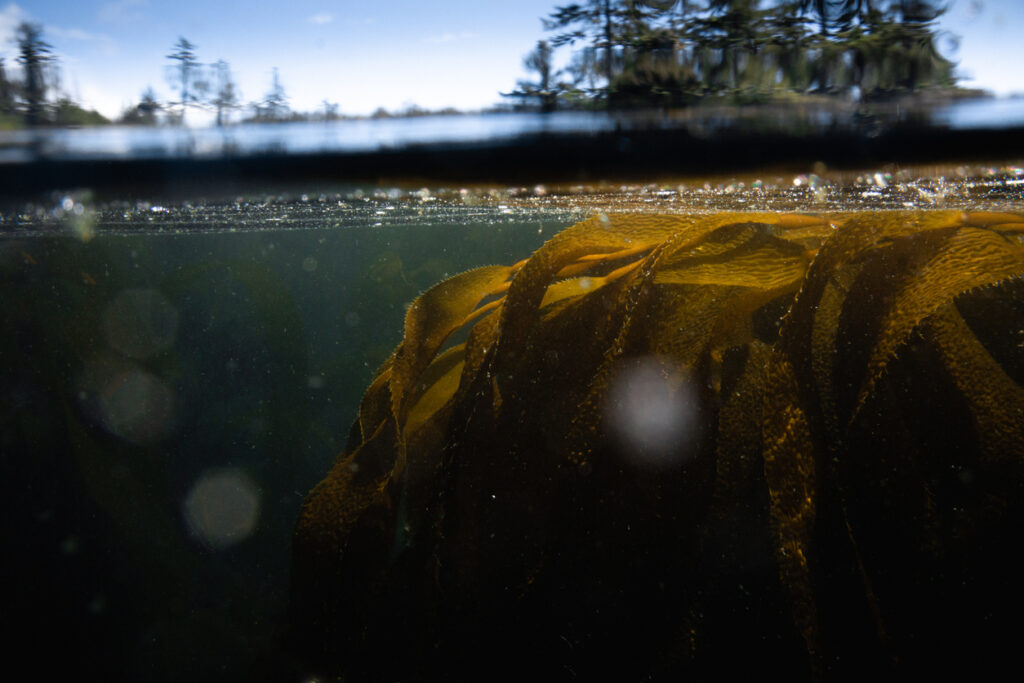 Photo by iStock
Tackling Marine Pollution
Marine debris and derelict vessels remain significant challenges for many coastal communities.
In Alert Bay, ’Na̱mg̱is First Nation has completed the removal, deconstruction and recycling of five derelict vessels, reducing pollution while creating local employment opportunities.
“The ’Na̱mg̱is are very pleased with the assistance in cleaning up debris and derelict vessels from our beach. We are hopeful it will inspire people to be more careful and work harder at looking after and respecting our environment. A responsibility we all share. Gilakasla,” said Chief Don Svanvik of ’Na̱mg̱is First Nation.
Elsewhere, Tsawout First Nation is removing a large derelict dock at Bazan Bay that weighs approximately 158,757 kilograms (350,000 pounds), while Klahoose First Nation is using a newly acquired remotely operated underwater vehicle to locate and remove marine debris around Cortes Island and surrounding waters.
The shíshálh Nation is partnering with Ocean Legacy Foundation to collect and properly dispose of discarded polystyrene dock floats through community “Turn It In” events, with additional cleanup efforts planned through March 2028.
Building Capacity For Coastal Stewardship
Several projects are focused on training, monitoring and marine planning.
On Vancouver Island, First Nations stewardship staff are receiving kelp-monitoring training through a partnership involving the Province, Marine Plan Partnership and the Hakai Institute. The training supports long-term monitoring efforts and sustainable harvesting practices.
Other initiatives include remotely operated vehicle surveys in the Discovery Islands and Bute Inlet to identify sensitive marine habitats, youth and Elder engagement programs to support marine planning, and reviews of marine recreation sites to help guide responsible public use while protecting culturally significant areas.
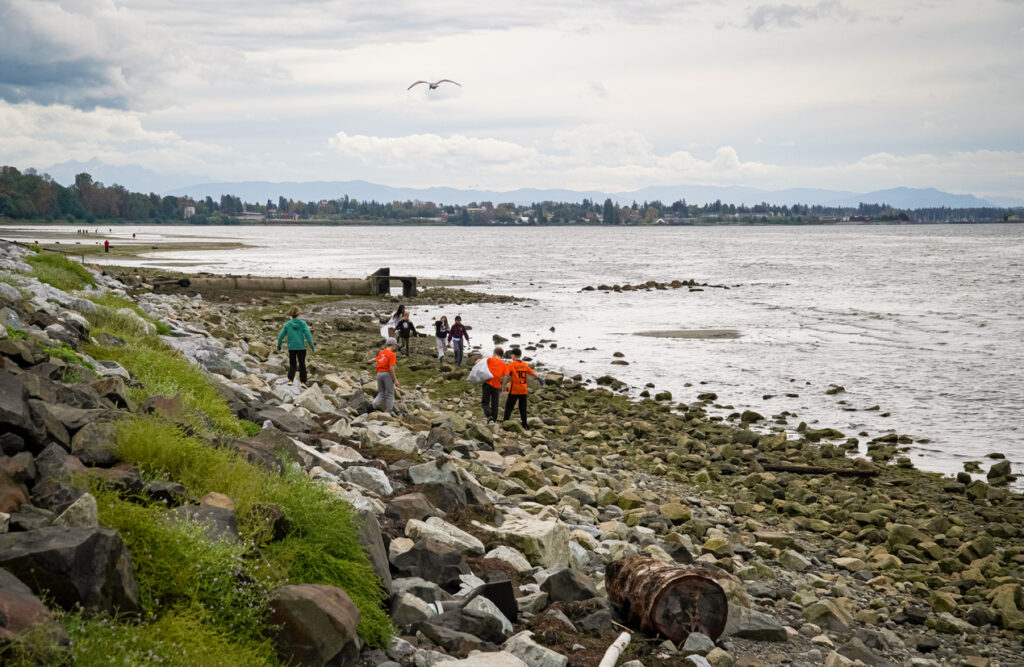 Photo by iStock
Beach clean-up efforts.
A Broader Vision For BC’s Coast
The stewardship projects build on broader provincial efforts to protect coastal ecosystems, including the recent agreement to establish a new national marine conservation area reserve on BC’s central coast.
The province says the projects advance reconciliation, Indigenous leadership and shared stewardship while helping ensure marine ecosystems remain healthy and productive for future generations.
“Our coast sustains all of us, providing food, livelihoods and connection, and it’s our responsibility to care for it in return,” said Randene Neill, Minister of Water, Land and Resource Stewardship. “By working in partnership with First Nations to restore habitats, reduce pollution, strengthen shoreline resilience and support traditional food systems, these initiatives turn Indigenous-led stewardship into lasting action, giving back to the waters and lands that have cared for communities for generations, and to ensure our shores remain healthy and resilient for the future.”
The announcement coincides with World Oceans Day, celebrated annually on June 8. According to the province, oceans produce at least 50 per cent of Earth’s oxygen, are home to most of the world’s biodiversity and provide the primary source of protein for more than one billion people worldwide. In British Columbia, the blue economy employs more than 130,000 people and contributes to an estimated $1.5 trillion per year global ocean economy.