

With its elongated body, broad head and surprisingly large mouth, the northern pikeminnow looks every bit the predator. Anglers sometimes dismiss it as a “trash fish,” blame it for declining salmon populations or confuse it with the invasive northern pike.
Advertisement
None of those characterizations tells the whole story.
Advertisement
The northern pikeminnow (Ptychocheilus oregonensis) is a native member of BC’s freshwater fish community. Although it does eat young salmon and trout, its ecological effects vary considerably among watersheds. In some altered river systems, large pikeminnow consume significant numbers of juvenile salmonids. Elsewhere, evidence suggests their impact has been exaggerated.
Advertisement
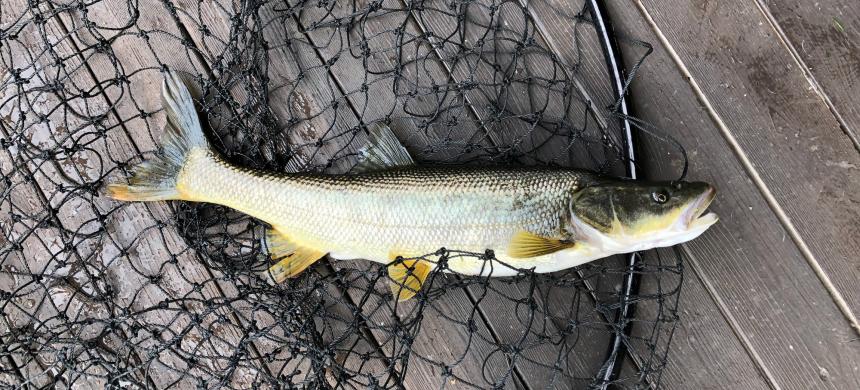 Photo by the Washington Department of Fish and Wildlife
A Very Large Minnow
Northern pikeminnow belong to the minnow family, although adults bear little resemblance to the tiny baitfish that word usually brings to mind. Most are relatively modest in size, but exceptional fish can grow longer than 60 centimetres.
They have streamlined bodies that are generally olive or grey-green along the back and silver to cream underneath. Their heads are somewhat flattened between the eyes, and the large, toothless mouth extends back to approximately the front of the eye.
Despite having no obvious teeth in their jaws, pikeminnow are effective fish-eaters. Like other members of the minnow family, they possess pharyngeal teeth farther back in the throat that help process food.
The species was formerly known by another common name containing a derogatory term for Indigenous women. The American Fisheries Society adopted “northern pikeminnow” in the late 1990s.
Pikeminnow Or Pike?
Northern pikeminnow are frequently confused with northern pike, but the two species are unrelated.
Northern pike have a flattened, duckbill-like snout, numerous visible teeth and a single dorsal fin positioned far back on the body. Their greenish sides are marked with pale spots. Northern pikeminnow have a more conventional fish profile, clear or lightly coloured fins and no visible jaw teeth.
The distinction is important in southern BC. Northern pikeminnow are native, while northern pike are native only to northeastern BC and are considered invasive in southern waters, including portions of the Columbia and Pend d’Oreille systems.
Pikeminnow may also be mistaken for peamouth chub. Peamouth have smaller mouths, rounder heads, small barbels at the corners of the mouth and dark horizontal bands along their sides.
At Home In BC Waters
Northern pikeminnow occur in numerous BC lakes and river systems, including portions of the Fraser, Columbia, Okanagan, Kootenay, Skeena and Nass drainages.
Young fish are commonly found in warm, shallow shoreline areas, while adults also use deeper water, pools, backwaters, rocky areas and current seams. Their ability to occupy varied habitats allows them to thrive in natural lakes, rivers and human-made reservoirs.
Spawning normally takes place from late spring into summer. The fish may gather in large groups over gravel, rubble or cobble, where females release thousands of eggs. Northern pikeminnow can also be relatively long-lived, giving adults time to reach substantial sizes.
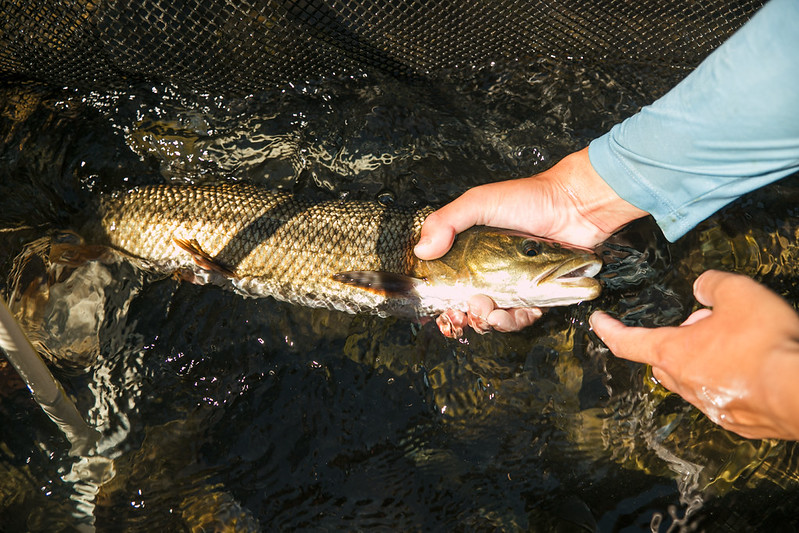 Photo by Fish-Bio/Flickr
Do They Threaten Salmon?
Young pikeminnow feed primarily on aquatic insects, zooplankton and other small organisms. As they grow, crayfish and fish become increasingly important. Large adults may eat sculpins, shiners, suckers and young salmonids.
However, their diet reflects what is available in a particular place. The presence of pikeminnow and salmon in the same watershed does not necessarily mean pikeminnow are limiting the salmon population.
Kootenay Lake provides an important example. During investigations into the lake’s kokanee decline, researchers found little overlap between northern pikeminnow and kokanee in deep, offshore habitat. A diet study cited by the province found only one kokanee in the stomachs of 106 pikeminnow. Evidence suggested large rainbow trout and bull trout were much more significant predators.
The situation is different in parts of the Columbia River in the United States. Dams and reservoirs can concentrate or disorient migrating juvenile salmon, creating feeding opportunities for large pikeminnow. This led to the Northern Pikeminnow Sport Reward Program, which pays anglers to remove qualifying fish from designated sections of the Columbia and Snake rivers.
The program is intended to reduce the abundance of large, highly predatory pikeminnow – not eliminate the species. Pikeminnow are native to the Columbia system, and the intensified predation problem is closely connected to changes caused by hydroelectric development.
An Overlooked Sport Fish
Northern pikeminnow can provide entertaining fishing on light tackle. Anglers may find them near rocky points, creek mouths, current breaks, bridge pilings and deeper pools.
Worms are effective bait where permitted. Small spoons, spinners, jigs, crankbaits and minnow-patterned flies can also produce fish. Larger specimens can strike aggressively and fight harder than their reputation suggests.
Pikeminnow are edible and have mild flesh, although numerous fine bones can make preparation difficult. Careful filleting, scoring the flesh before cooking or pressure-canning can make them easier to eat.
Anglers should always consult BC’s current freshwater fishing regulations before targeting or retaining pikeminnow. Regional and waterbody-specific rules may apply.
More Than A “Trash Fish”
Northern pikeminnow demonstrate why fish cannot simply be divided into “good” and “bad” species. They are native predators that evolved alongside salmon, but their influence changes with habitat, prey abundance and alterations to the watershed.
In some waters, they may affect the survival of young salmonids. In others, their role is relatively minor. Either way, management decisions should be based on evidence from the individual watershed – not on the fish’s reputation elsewhere.
The northern pikeminnow is more than an unwanted catch. It is one of BC’s largest native minnows, an accomplished predator and an important part of the province’s complex freshwater ecosystems.