

A heavy-racked bull steps from the timber carrying six points on each side. How old is he?
Advertisement
It is tempting to attach a number to him based on his antlers. A spike must be young. A five-point bull must be a little older. A big 6×6 must have several more years behind him.
There is some truth behind those generalizations, but elk antlers are far more complicated than a simple point-per-year formula.
Advertisement
An elk’s antlers can provide clues about its stage of development, physical condition and even the environment in which it lives. What they cannot reliably provide is an exact age.
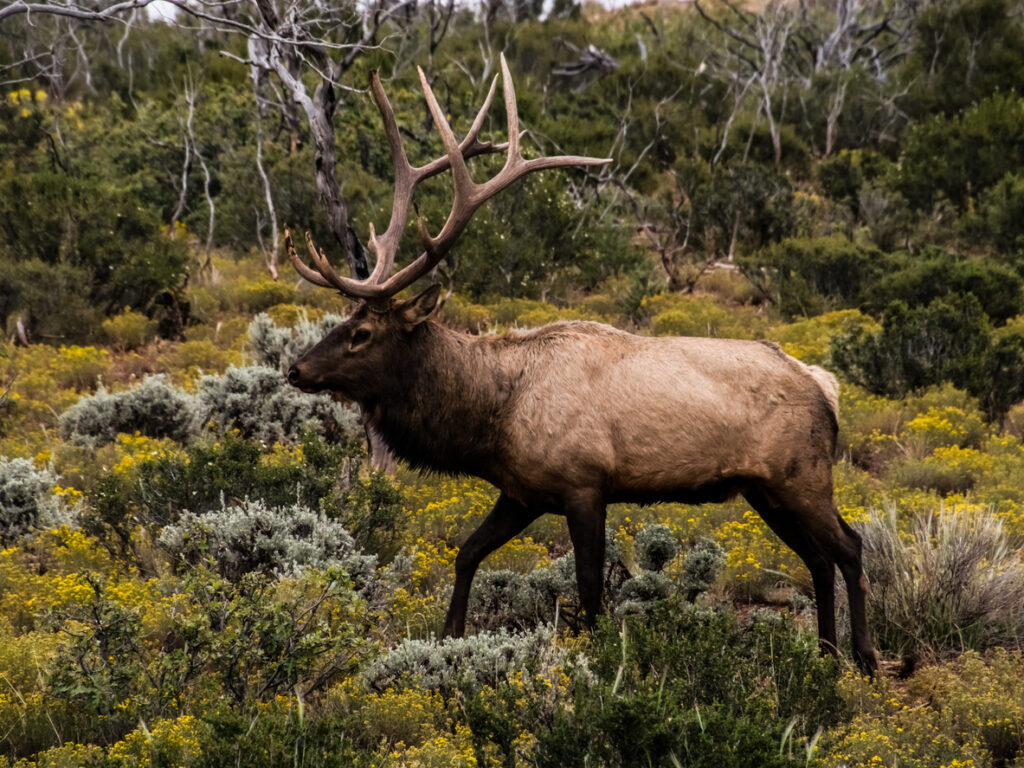 Photo by iStock
Antlers Change As Bulls Mature
Young bulls generally start small. British Columbia wildlife information describes yearling bull elk as typically carrying unbranched spike antlers. Two-year-old bulls commonly have more slender racks with three or four points on each side, while three-year-olds often carry heavier antlers with four or five points. Mature bulls four years and older commonly develop the familiar six-point configuration.
Advertisement
That progression makes antlers useful for placing some animals into broad age or development classes.
B.C.’s own ungulate inventory guidelines use antler characteristics when classifying bulls during wildlife surveys, progressing from yearling spikes through increasingly large and massive antler classes.
But broad classification is very different from declaring that a six-point bull is a particular age.
A younger animal in excellent condition can develop an impressive rack relatively quickly, while another bull of the same age may carry considerably smaller antlers.
Nutrition Matters
Growing antlers is an enormous seasonal investment.
Bull elk shed their antlers and grow an entirely new set each year. While developing, the antlers are covered in velvet rich in blood vessels that deliver the nutrients and minerals required to build the rapidly growing bone.
That means the quality and quantity of available food can influence what eventually appears above a bull’s head.
Research into antler development in members of the deer family has repeatedly shown that nutritional conditions can affect antler size and even point development. Animals living in productive habitat with abundant high-quality forage may be better equipped to devote resources to antler growth than animals dealing with poor forage, drought, severe winters, disease or other physiological stresses.
The rack a hunter sees in September is therefore partly a record of what happened to that animal during the preceding growing season.
Genetics Also Play A Role
Just as individual elk vary in body size and other physical characteristics, they also vary in their potential for antler growth.
Genetics influence antler size and form, although their effects interact with nutrition, age, hormones and environmental conditions. A well-fed bull cannot necessarily grow enormous antlers simply because food is plentiful; its inherited potential still matters. Conversely, an animal with the genetic potential to produce large antlers may never fully express that potential if its nutritional or physical condition is poor.
Injury and illness can complicate the picture further. Damage during the velvet-growing period or health problems affecting the animal can result in unusual or asymmetrical antler development.
Together, these factors explain why two bulls born in the same year can eventually carry very different racks.
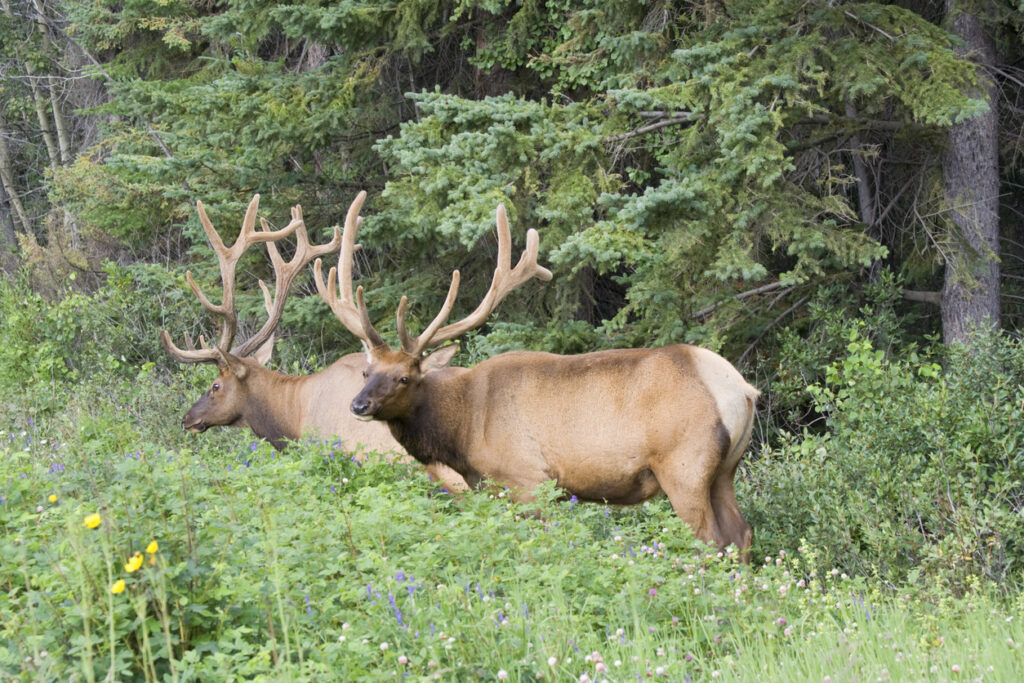 Photo by iStock
Six Points Doesn’t Mean Six Years
This is where one of the most persistent elk-aging shortcuts falls apart.
A six-point rack does not mean a bull is six years old.
Six tines per antler are simply a common configuration among mature American elk. Some bulls reach six points while still relatively young, and additional birthdays do not necessarily produce additional points. Boone and Crockett notes that a bull may progress from a spike to five points and then six points during its early years, but remain a six-point bull through many subsequent seasons.
Older bulls may instead add antler length, beam thickness and overall mass without adding more points.
Healthy bulls can continue producing increasingly impressive antlers well beyond the age at which they first become a 6×6. National Park Service information notes that bulls around 11 or 12 years old may produce some of their heaviest antlers before antler size begins declining with advanced age.
That means a three- or four-year-old six-point bull and a much older six-point bull can share the same point count while looking dramatically different.
Read The Whole Animal
For hunters observing elk in the field, antlers are best treated as one part of a much larger picture.
Body characteristics can provide additional clues. Mature bulls generally develop heavier bodies, thicker necks and more substantial chest and shoulder development than younger animals. Behaviour and overall appearance may also help experienced observers distinguish a young bull from a mature one.
Even then, field judging remains an estimate.
Determining an elk’s exact age requires methods beyond simply studying its rack, and wildlife biologists may use teeth and other biological information when more precise aging is required.
Antlers still tell a fascinating story. They reflect growth, nutrition, genetics, health and the demanding annual cycle of a bull elk.
They just don’t come stamped with a birth date.
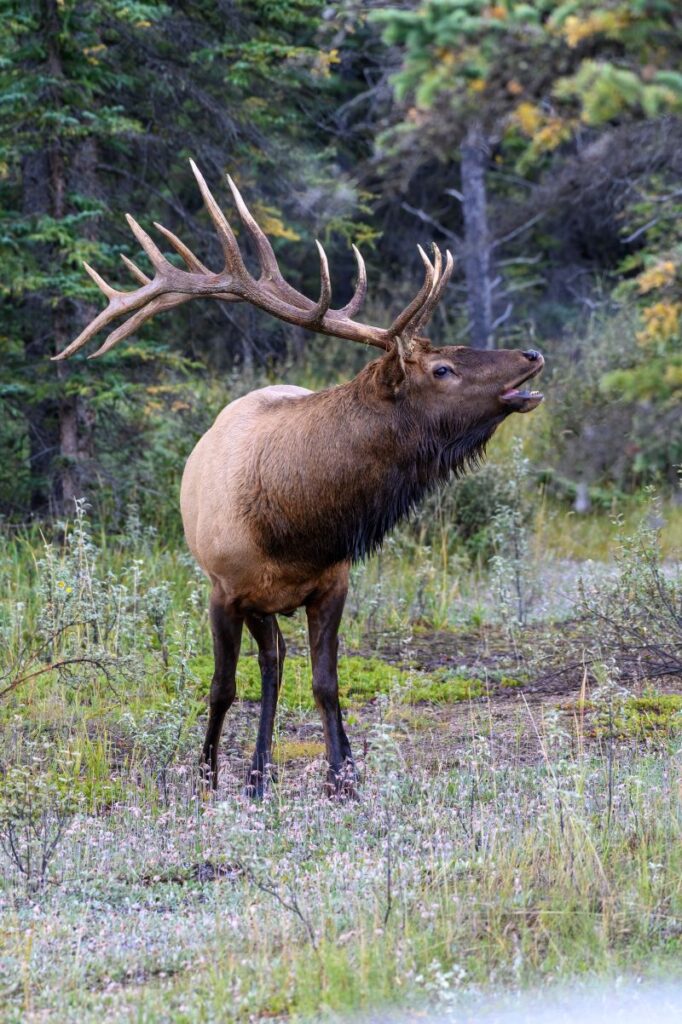 Photo by iStock