

Despite its name, the fisher doesn’t catch fish. And many British Columbians have likely never seen one at all.
Advertisement
Elusive, solitary and primarily nocturnal, the fisher is one of BC’s most mysterious forest predators – a cat-sized member of the weasel family that slips almost silently through dense timber in search of prey. With dark brown fur, a long bushy tail and sharp climbing abilities, fishers occupy a unique niche in the province’s ecosystems, where they play an important role as mid-sized carnivores.
Advertisement
And while the species remains widespread across Canada, researchers warn that some BC populations face mounting pressure from habitat loss, fragmentation and trapping.
Advertisement
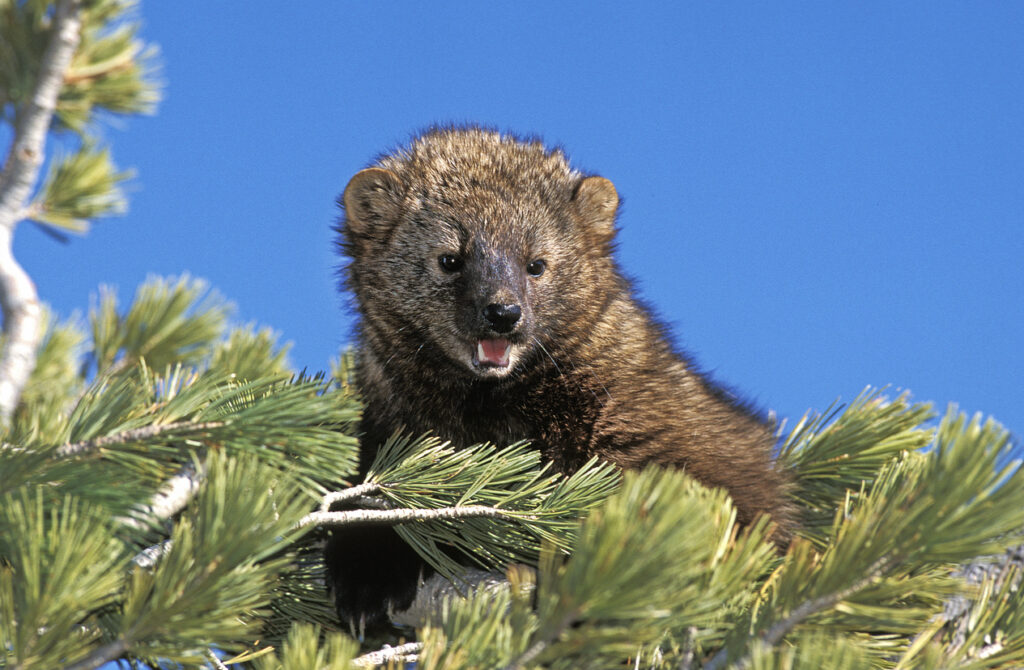 Photo by iStock
What Exactly Is A Fisher?
The fisher (Pekania pennanti, formerly Martes pennanti) belongs to the mustelid family, alongside martens, mink, wolverines and otters. Adult males can weigh up to twice as much as females, with some reaching more than six kilograms.
They are agile climbers but spend much of their time on the forest floor, weaving through deadfall and thick understory while hunting snowshoe hares, squirrels, mice, birds and carrion. Fishers are also one of the few predators capable of regularly killing porcupines – a feat accomplished through repeated attacks to the face before flipping the animal over to expose its vulnerable underside.
Though they are capable of climbing trees headfirst down the trunk, fishers generally prefer mature forest habitats with complex structure, heavy canopy cover and plenty of woody debris.
Where Fishers Live In BC
Fishers are found across much of British Columbia’s interior, including portions of the Cariboo, Thompson, Omineca, Skeena and Kootenay regions. However, their distribution is patchy and population density is relatively low compared to eastern Canada.
Researchers estimate that BC’s fisher population may range between roughly 1,100 and 2,700 animals, though exact numbers remain uncertain due to the species’ secretive nature and the challenges associated with monitoring them.
Fishers in BC tend to require large expanses of connected forest. Studies suggest they rely heavily on late-successional and old-growth habitat features, including large trees, den cavities and coarse, woody debris. Logging and industrial development can fragment those habitats and increase access into previously remote areas.
Unlike some other furbearers, fishers also appear sensitive to deep snow. In many areas of the province, they select habitats with lower snow accumulation or compacted snow conditions that make travel and hunting easier.
A Valuable Furbearer
Fishers have long been part of BC’s trapping history. The province has maintained registered trapline systems since the 1920s, and fishers remain one of 19 officially classified furbearer species in British Columbia.
To obtain a trapping licence in BC, trappers must complete mandatory education focused on humane trapping methods, fur handling, regulations and trapline management.
Historically, fisher pelts were highly valued for their dense, glossy fur. Across North America, intense trapping pressure in the late 1800s and early 1900s contributed to dramatic declines in fisher populations. In some parts of the United States, the species was nearly eliminated before conservation measures and habitat recovery helped populations rebound.
In British Columbia, regulated trapping still occurs in portions of the province, though management has become increasingly cautious in areas where populations are considered vulnerable. Provincial regulations can include quotas, seasonal restrictions and gear requirements intended to reduce unintended mortality.
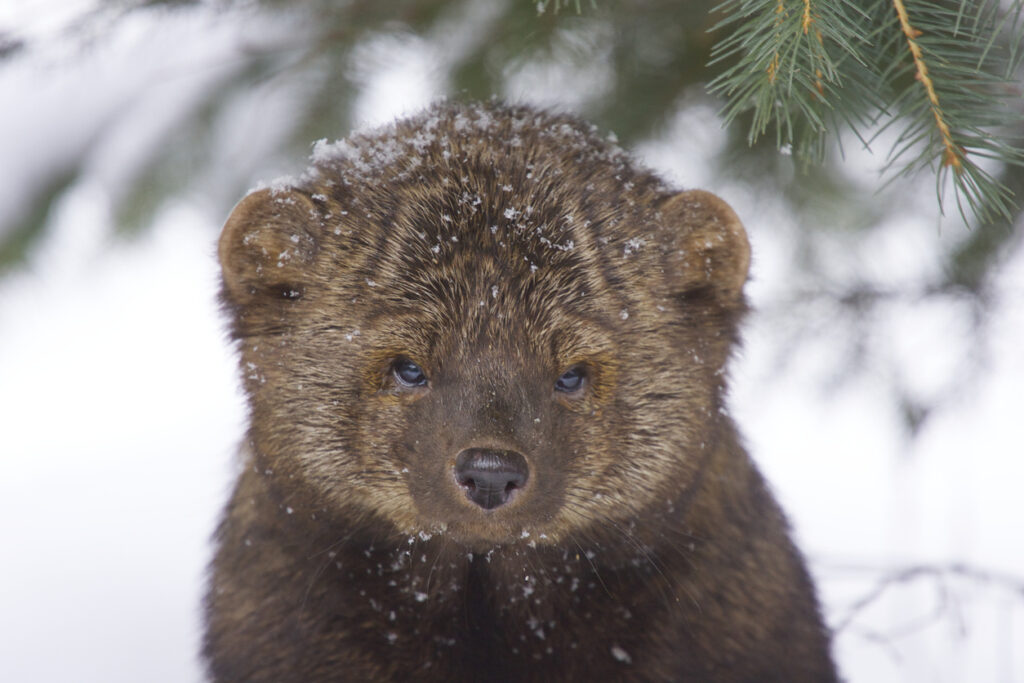 Photo by iStock
Conservation Concerns
Conservation groups and wildlife researchers continue to raise concerns about fisher populations in parts of BC, particularly in the central interior and northeastern regions.
Habitat loss remains one of the biggest threats. Extensive forest harvesting can remove the mature forest characteristics fishers depend on while simultaneously creating roads and access corridors that may increase trapping pressure. Mountain pine beetle outbreaks and other large-scale forest disturbances have also altered significant portions of fisher habitat across the province.
Research published in recent years has also suggested trapping mortality can accelerate declines in already vulnerable fisher populations.
In response, conservation initiatives in BC have included efforts such as fisher exclusion boxes designed to reduce accidental capture. Programs involving the BC Fisher Habitat Working Group, government agencies and conservation organizations have distributed these devices to trappers in several Interior regions.
Some fisher populations in BC are currently considered at risk, with experts recommending increased habitat protection and ongoing monitoring.
Fascinating Fisher Facts
- Despite the name, fishers rarely eat fish. The name likely evolved from the European word “fitch,” referring to a polecat.
- Fishers are among the few predators capable of regularly hunting porcupines.
- Females experience delayed implantation, meaning fertilized embryos pause development for months before pregnancy begins. The entire reproductive cycle lasts nearly a year.
- Fishers are mostly solitary except during breeding season.
- Though excellent climbers, fishers do most of their hunting on the ground.
A Species Few People Ever See
Even hunters, hikers and trappers who spend decades in BC’s backcountry may never encounter a fisher. Their low densities, wide-ranging behaviour and preference for dense forest make them one of the province’s true hidden predators.
Yet their presence says a great deal about the health of an ecosystem. Where mature forests remain connected and prey populations thrive, fishers continue to persist – quietly moving through the shadows of British Columbia’s wild places.