

A long day in the field can end in plenty of ways that weren’t part of the original plan.
Advertisement
Maybe you’re waiting beside a downed animal while a hunting partner heads for help. Perhaps darkness catches you farther from the truck than expected. Bad weather moves in, an injury slows the hike out or you simply decide that staying put until daylight is safer than navigating rough country after dark.
Whatever the reason, once you stop moving in cold weather, staying warm becomes a priority — and one of the easiest sources of heat loss to overlook is directly beneath you.
Advertisement
The Canadian Red Cross identifies conduction as one of the four primary ways the body gains or loses heat. Conduction occurs when heat transfers through direct contact with a solid or liquid. Sit or lie on cold soil, rock or snow and your warmer body begins transferring heat toward that colder surface. Increasing the insulation between you and the ground helps slow that process.
That means the extra jacket in your pack may sometimes be more useful underneath you than draped over your shoulders.
Advertisement
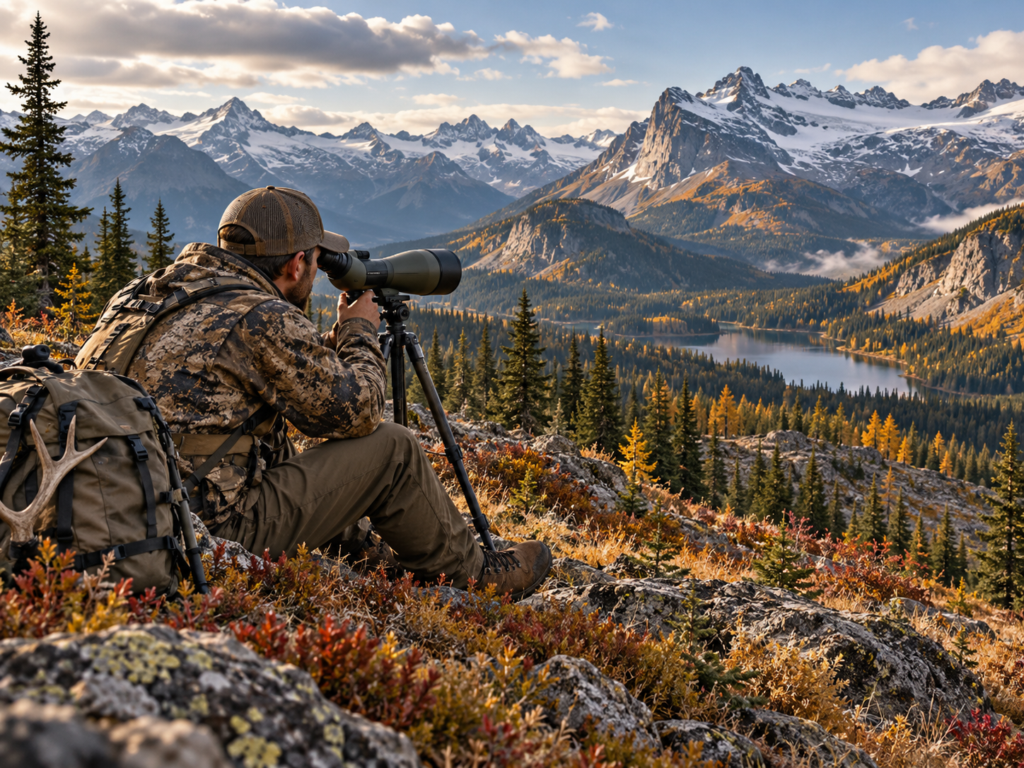 Illustration created using OpenAI
Why The Ground Matters
Hunters spend a surprising amount of time in contact with the earth.
We sit beside trails and cutblocks. We kneel while field dressing animals. We settle against trees to glass. We take breaks on rocks, logs and snowbanks. And during an unplanned overnight stay, we may spend hours lying on whatever surface happens to be available.
Cold ground can steadily pull warmth away from the body. Moisture makes the situation worse: wet clothing contributes additional heat loss through evaporation, while wind carries heat away through convection.
Together, those factors help explain why conditions that seemed manageable while hiking can feel dramatically colder once you stop.
It’s also why simply wrapping yourself in more material isn’t always the complete answer. Blankets, jackets and sleeping bags trap warmth around you, but compressed insulation beneath your body becomes less effective. A sleeping bag that feels wonderfully lofty across your chest may be flattened nearly paper-thin beneath your hips and shoulders.
A separate insulating layer underneath maintains that barrier.
Your Pack Is Already Insulation
Ideally, anyone venturing deep into the backcountry during shoulder-season or late-season hunts should consider carrying a compact sleeping or sitting pad.
But unexpected nights are, by definition, unexpected.
Fortunately, hunters often carry several items capable of creating an improvised barrier.
An empty or partially emptied backpack can be placed beneath the torso. Spare clothing can be spread underneath you rather than worn in unnecessary layers. A rain jacket, foam kneeling pad or seat cushion can help separate part of the body from cold ground.
Even equipment bags and other dry, soft gear can contribute.
The objective isn’t necessarily comfort. It is simply to create as much separation as possible between your body and the cold surface.
Natural material may also help when appropriate and permitted. A thick layer of dry grasses, leaves or similar loose vegetation can trap pockets of air and create insulation. Avoid stripping live vegetation or damaging habitat, and choose only material that is genuinely dry; wet vegetation may make your situation colder rather than warmer.
If resources are limited, concentrate insulation beneath the torso first, where much of the body’s mass is in contact with the ground.
And don’t forget the obvious: choose your resting location carefully. A dry patch beneath thick timber may be significantly preferable to damp soil in a low area. Avoid exposed ridges where wind increases heat loss, and don’t settle directly onto snow if you can construct an insulating barrier first.
Sleeping Pads Aren’t Just About Comfort
For hunters who regularly hike several kilometres from the road, a lightweight sleeping pad can be inexpensive insurance.
Modern backpacking pads are assigned an R-value, which measures resistance to heat transfer. The higher the number, the greater the insulation from the ground. Broadly speaking, pads below R-2 are intended for warmer conditions, while roughly R-4 to R-5.4 is considered appropriate for colder weather. Pads rated R-5.5 and above are commonly intended for very cold conditions.
The values can also be combined. If two compatible pads are stacked, their R-values are essentially additive — one reason winter campers sometimes pair a closed-cell foam pad with an inflatable one.
For hunters, however, the best pad is ultimately the one that actually makes it into the pack.
A full-size winter mattress may be unnecessary for a day hunt, but a small section of closed-cell foam weighs little and can serve double duty as a glassing seat, kneeling pad and emergency insulation. Hunters planning a spike camp or overnight trip have more reason to choose a full-length insulated pad appropriate for expected temperatures.
Think of it as part of your sleep system rather than simply a mattress.
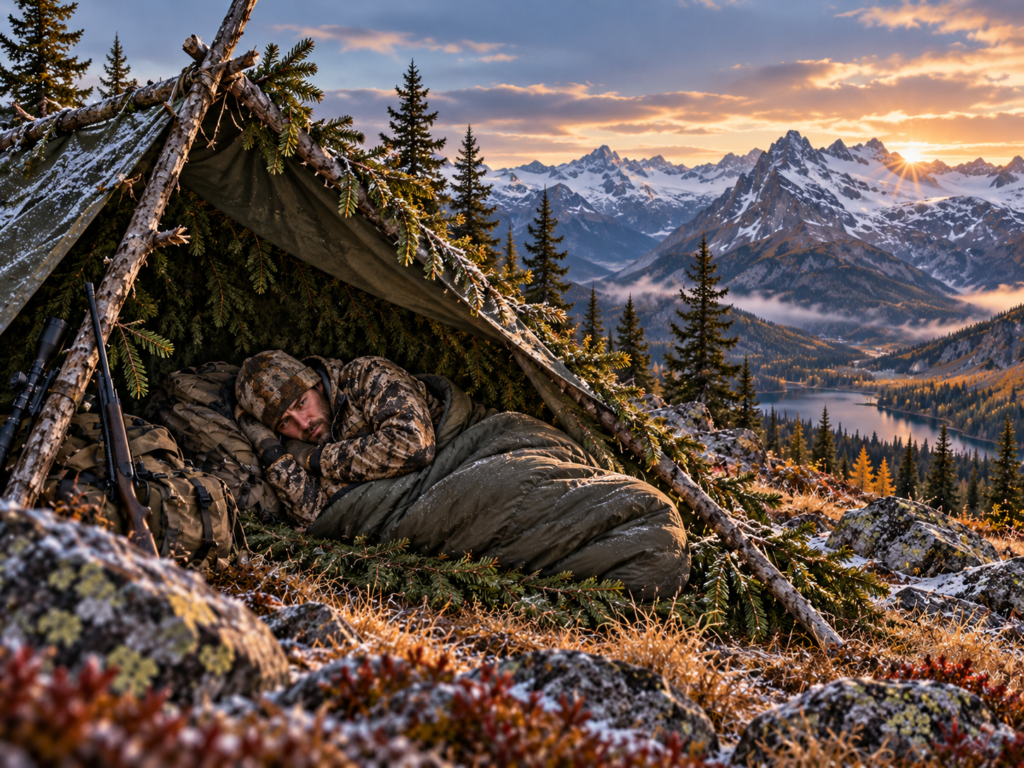 Illustration created using OpenAI
Recognize When Being Cold Is Becoming Dangerous
Feeling uncomfortable and developing hypothermia are very different things.
Early signs of hypothermia can include shivering, feeling intensely cold and numbness in the fingers and toes. As it becomes more serious, coordination, speech, judgment and behaviour can become impaired. In severe cases, a person may stop shivering altogether — not because they are warming up, but because their condition is becoming life-threatening.
Anyone showing significant signs of hypothermia needs more than a better seat.
Get the person out of the cold and into shelter when possible, remove wet clothing in a protected environment, replace it with dry layers and insulate them from further heat loss. Severe hypothermia requires emergency medical assistance.
Prevention is considerably easier.
Think Below, Not Just Above
When packing for a cold-weather hunt, most of us naturally picture insulation as something we wear: base layers, fleece, puffy jackets, gloves and toques.
That gear matters.
But staying warm is really about controlling heat loss from every direction.
If you become stationary for an extended period — whether glassing a hillside, waiting for a partner or facing an unexpected night in the woods — take a moment before dropping onto the nearest rock or patch of earth.
Put something between yourself and the ground.
A proper sleeping pad is excellent. A foam seat is good. A backpack, pile of dry clothing or improvised insulating bed may be far better than nothing.
Sometimes the layer that keeps you warmest isn’t the one you put on. It’s the one you put down.