

At first, it might sound like a distant engine struggling to turn over: a single low thump, a pause, then another. The beats come closer together, gathering speed until they merge into a rapid, pulsing roll. A few seconds later, the forest is quiet again.
Advertisement
Anyone unfamiliar with the sound could be forgiven for overlooking it – or for assuming it came from something much larger than a bird. But the performer is a male ruffed grouse, and his distinctive drumroll is one of the most remarkable sounds in the woods.
Advertisement
It is not a song or a call. The grouse makes it with his wings.
Advertisement
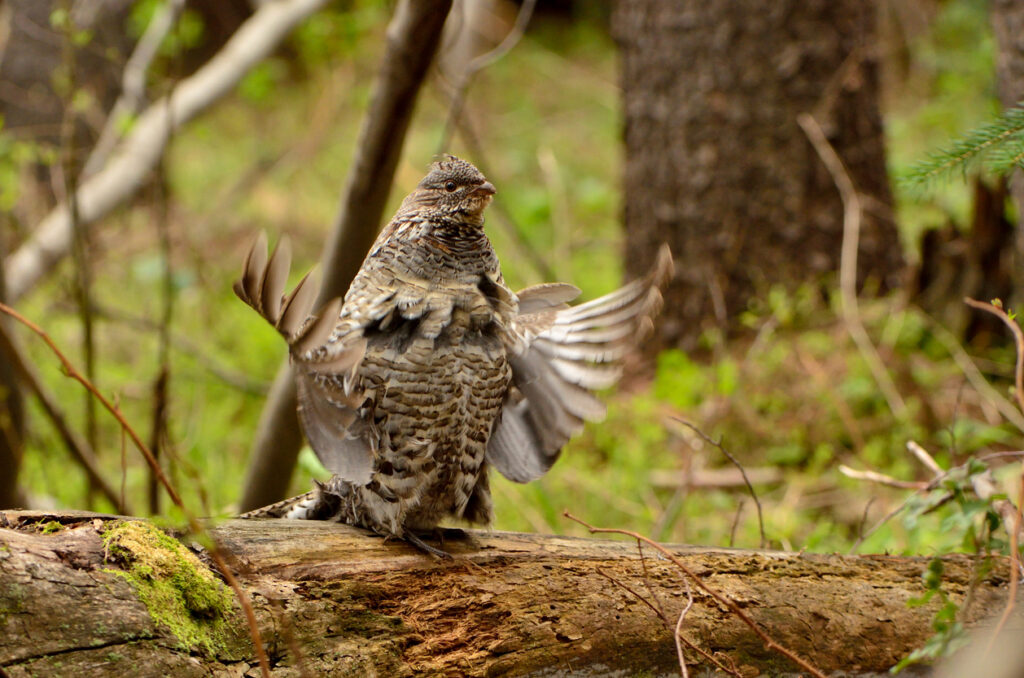 Photo by iStock
Drumming On Air
The male usually performs from a fallen log, although a stump, rock or mound of earth may also serve as a platform. These sites are commonly called drumming logs, a name that has helped create a persistent misunderstanding: the bird does not pound his feet on the wood or strike it with his wings.
The log is simply a stage.
To begin the display, the grouse plants his feet, braces himself with his tail and holds his body upright. His dark neck ruff may be raised and his tail spread. He then snaps his cupped wings forward and back through the air without allowing them to touch each other, his body or the log.
Each forceful wing movement produces a sudden change in air pressure. Air rushes into the low-pressure space created beneath and around the wings, sending out the deep pulse we hear as a thump. Because the sound is low in frequency, a person standing close to a drumming bird may feel it as much as hear it.
The first beats are slow and distinct. The male progressively shortens the interval between them until the individual thumps blur into a fast, vibrating finish. A complete sequence generally lasts only eight to 10 seconds, but it can contain as many as 50 wingbeats.
What sounds effortless is a specialized display that young males must learn. Their early attempts may be irregular before they develop the timing and control needed to produce the familiar accelerating roll.
A Message Through The Understory
Drumming serves two closely related purposes: it advertises a male to females and announces his claim to other males. The low pulses travel effectively through dense cover, allowing a grouse to broadcast his presence without abandoning the shelter of the forest understory.
That is useful for a bird whose mottled brown, grey and black plumage makes it exceptionally difficult to see among leaf litter, shadows and fallen timber. A male may reveal his location repeatedly by sound while remaining almost invisible to a listener nearby.
Although drumming is most strongly associated with the spring breeding season, males may perform at other times of year. Activity often rises again in fall, and drumming can occasionally be heard in winter or even at night. During the spring peak, the best listening is often around dawn, when the woods are relatively still and males are especially active.
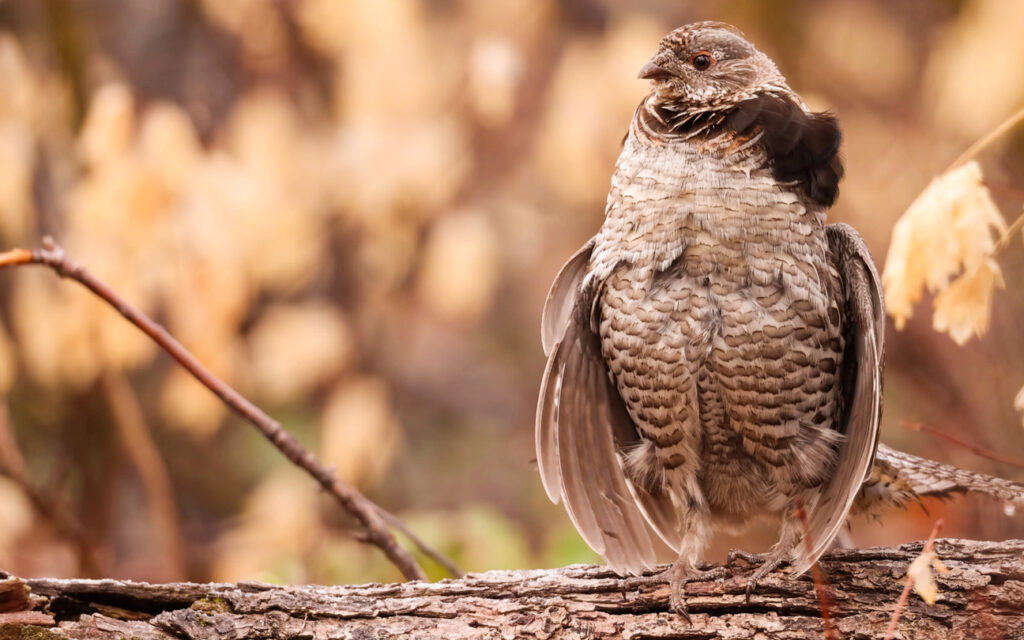 Photo by iStock
Finding The Drummer
Ruffed grouse are resident across much of forested Canada and occur widely in British Columbia. They make frequent use of deciduous and mixed forests, particularly younger stands with a dense layer of woody stems. Aspen, willow, alder and other shrubs can provide food as well as the thick cover grouse rely on throughout the year.
The same structure is often found around a well-used drumming site. A log may look ordinary to us, but its location matters. The male needs enough room to perform, a firm surface and surrounding cover that helps conceal him from predators while placing him within reach of potential mates.
Following the sound to its source can be difficult. Low-frequency pulses are hard to pinpoint, and the grouse may stop the moment it detects movement. Rather than pushing directly through the brush, listen for several sequences and use each one to narrow the direction. Scan the tops of low logs, stumps and rocks, paying attention to shapes that do not quite match the surrounding bark and debris.
If you do locate the bird, watch from a respectful distance. A drumming log may be used repeatedly, and crowding the male can interrupt the display or cause him to abandon the site temporarily.
For most people, however, hearing the performance is the experience. The ruffed grouse can remain hidden and still make its presence unmistakable: a bird scarcely moving from one spot, beating nothing but air and sending a miniature roll of thunder through the trees.