

The Pacific Salmon Foundation (PSF) has awarded a record $1.93 million to 144 salmon conservation projects led by First Nations, schools, hatcheries and stewardship groups across British Columbia and the Yukon.
Advertisement
The funding, announced through PSF’s Community Salmon Program, is expected to generate $11.3 million in total conservation value through volunteer labour and in-kind contributions. The release represents the largest grant distribution in the program’s 32-year history.
Advertisement
Revenue from the Salmon Conservation Stamp – purchased by anglers with their saltwater fishing licence – and donor support helped meet unprecedented demand for conservation funding. Despite the record investment, PSF says a funding shortfall remains.
Advertisement
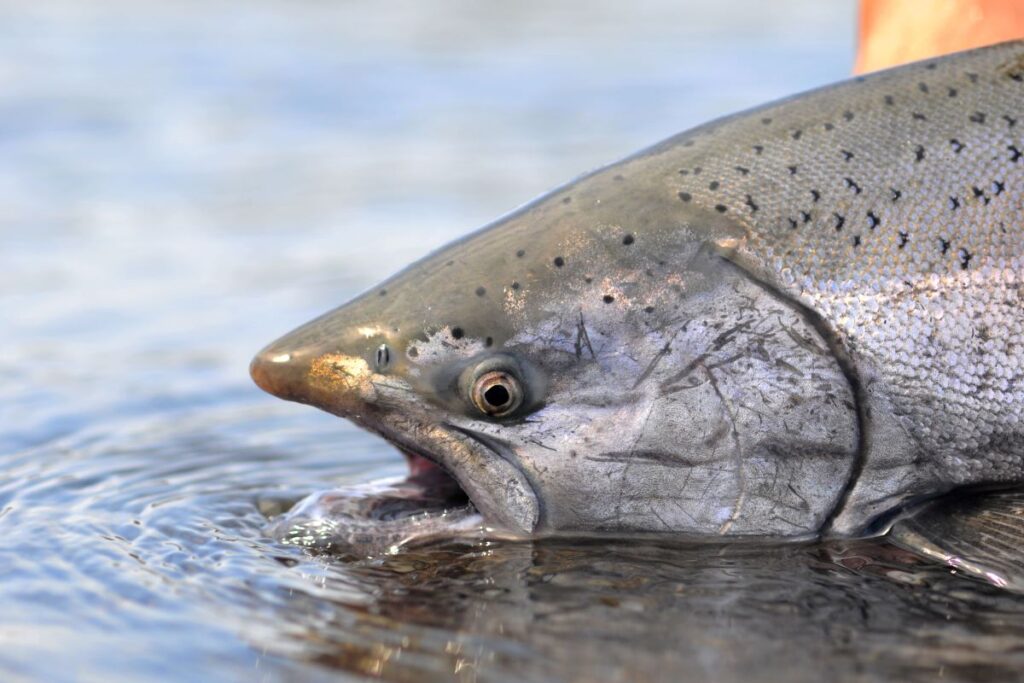 Photo by iStock
“A tremendous depth of salmon knowledge exists within First Nations and local stewardship groups. That’s what the PSF’s Community Salmon Program has always been about: investing in grassroots conservation and empowering local stewards to make an impact in their watersheds and communities,” says Michael Meneer, PSF President and CEO.
“The $1.4 million unmet need for funding reflects the critical state of Pacific salmon, with two-thirds of populations struggling in British Columbia and the Yukon. The passion and readiness of local stewards give us hope for the future of salmon, while underscoring the long-term investments needed to support their recovery.”
PSF manages proceeds from the Salmon Conservation Stamp on behalf of Fisheries and Oceans Canada and amplifies those funds through donor contributions and support from the Province of British Columbia.
Since 1994, the Community Salmon Program has directed $33.7 million to more than 3,740 conservation projects across BC and the Yukon. The program mobilizes local volunteers who contribute more than 60,000 hours annually to salmon stewardship efforts.
Projects funded through the latest grant cycle range from habitat restoration and watershed recovery planning to stock assessment, public education and community outreach.
Vancouver Island Stream Restoration Showing Results
Among the projects highlighted by PSF is ongoing restoration work on Brooklyn Creek near Comox, a six-kilometre stream that supports coho and pink salmon while flowing through farms, parks, residential areas and multiple jurisdictions before reaching the Comox Estuary.
The Brooklyn Creek Watershed Society has been working to improve the watershed since 1998. Funding received from PSF in 2022 allowed the group to focus on restoring habitat within Birkdale Farm, an important area for juvenile and adult coho salmon.
“This area of Brooklyn Creek had great potential, but it was a homogenous, scoured channel prone to flash flooding and drying out. Our goal was to bring back the diverse habitat features that salmon need,” says John Neilson, the society’s president.
“We’ve got a jewel here, and we want to save it. It’s been very rewarding to see a healthier watershed that is appreciated by the community, so much so that volunteers are planning a celebratory toast to the creek.”
Over four years, volunteers and restoration crews have installed more than 15 pools, 20 large woody debris structures, 300 cubic metres of spawning gravel and 4,000 native plants. According to PSF, this spring’s count of juvenile coho salmon was the highest recorded in the stream in 15 years.
A new $39,000 grant will support restoration of the final unrestored section of the farm this summer.
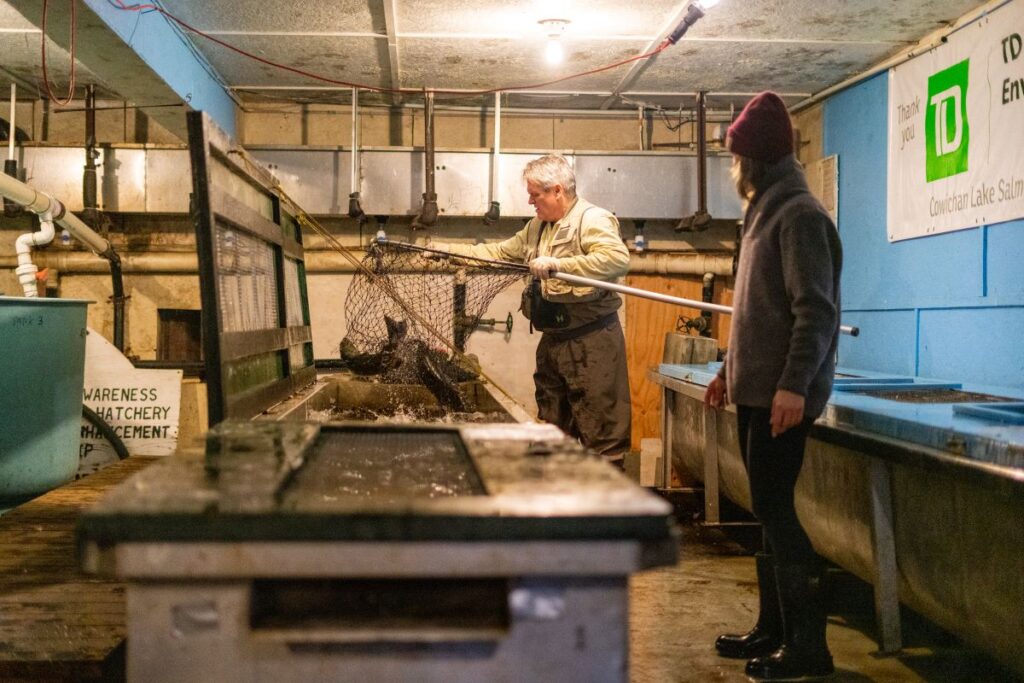 Photo by Chase White
Stewardship Groups Tackle Whirling Disease
Another funded initiative focuses on preventing the spread of whirling disease in the Kootenay region.
The parasite, which has reached kokanee salmon habitat in Kootenay Lake near Nelson, attacks juvenile salmonids and can cause severe deformities and mortality. While it poses no risk to humans or other animals, mortality rates among young fish have reached 90 per cent in some affected U.S. watersheds.
“With no cure available, prevention is our only effective tool,” says Molly Tilden, Development Supervisor at the Central Kootenay Invasive Species Society.
“We have to assume whirling disease could be anywhere in the region, and people can carry it across waterways within hours. That’s why our actions matter to stop the spread for salmon, which are essential to First Nations culture and drive local fishing and tourism.”
Using information gathered from more than 100 survey responses in 2025, the organization will use PSF funding to expand public outreach efforts encouraging anglers, boaters and other water users to clean, drain, dry and decontaminate equipment before moving between water bodies.
The project will also support the creation of culturally relevant educational materials developed in partnership with local First Nations.
Restoring Water Security For Babine Sockeye
In northwestern BC, Lake Babine Nation Fisheries is preparing a multi-year restoration initiative aimed at improving conditions for sockeye salmon in the Skeena watershed.
Recent drought conditions have prevented returning sockeye from reaching spawning habitat in portions of Lake Babine Nation territory northeast of Houston.
“We’re seeing severe habitat degradation and disconnection – the effects of extensive logging and now climate change – and it’s contributing to major declines in wild Babine sockeye. The landscape and floodplains no longer act as sponges, storing and releasing cool water when salmon need it most. In the summer and fall, everything dries up,” says Michael Ewaschuk, Senior Biologist at Lake Babine Nation.
With support from PSF, restoration work on Tachek and Cross creeks will begin with construction of beaver-dam analogues designed to restore natural hydrological processes.
“Beaver dams create wetland habitats that naturally moderate climate extremes year-round by absorbing peak flows during spring melt and storing water to keep streams replenished through dry seasons. That matters not just for sockeye, but for the entire watershed and the people who depend on it,” adds Ewaschuk.
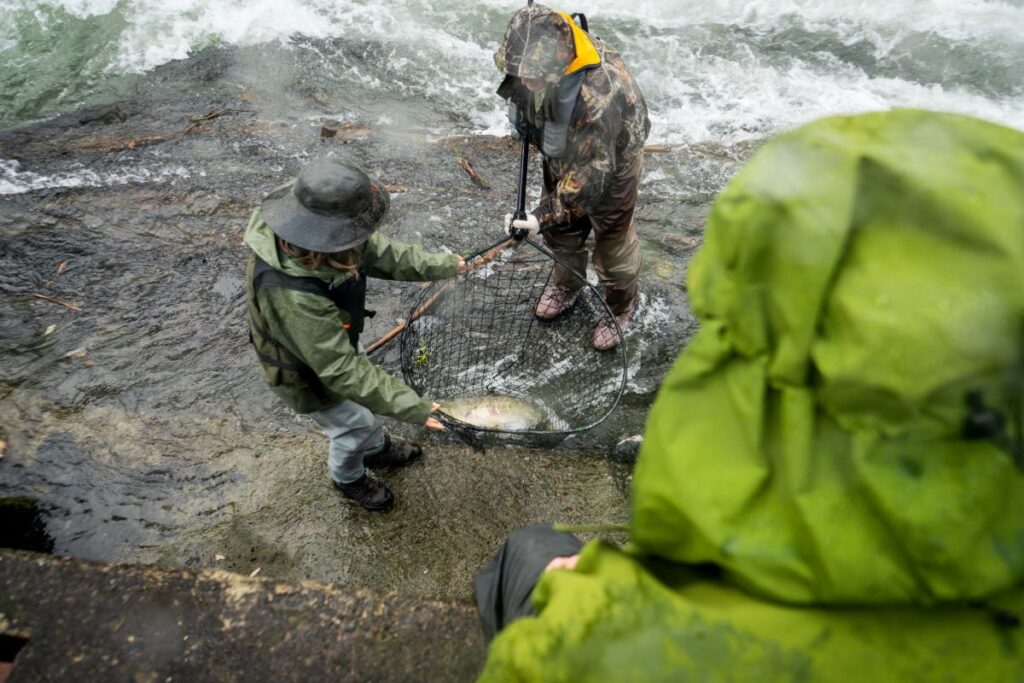 Photo by Chase White
Hundreds Of Projects Funded
The 2026 spring funding round supports projects throughout the province and Yukon, including habitat rehabilitation, stock enhancement, stock assessment, environmental education, watershed planning and stewardship initiatives.
Recipients include First Nations, streamkeeper groups, conservation organizations, hatcheries, schools, local governments and research institutions working to restore and protect salmon habitat in watersheds from Vancouver Island and the Lower Mainland to the Skeena, Kootenays, Interior and Yukon.
PSF says applications for the next Community Salmon Program funding cycle will open in early September and close Oct. 15, 2026.
The foundation acknowledged support from Fisheries and Oceans Canada, the Province of British Columbia, and numerous corporate, foundation and individual donors who help fund community-led salmon conservation efforts.