

Each spring, as snow retreats from valley bottoms and forest floors begin to warm, one of BC’s most sought-after wild edibles makes a brief appearance: fiddleheads. These tightly coiled young fern fronds are prized for their earthy, slightly nutty flavour – but harvesting them safely requires careful identification and preparation.
Advertisement
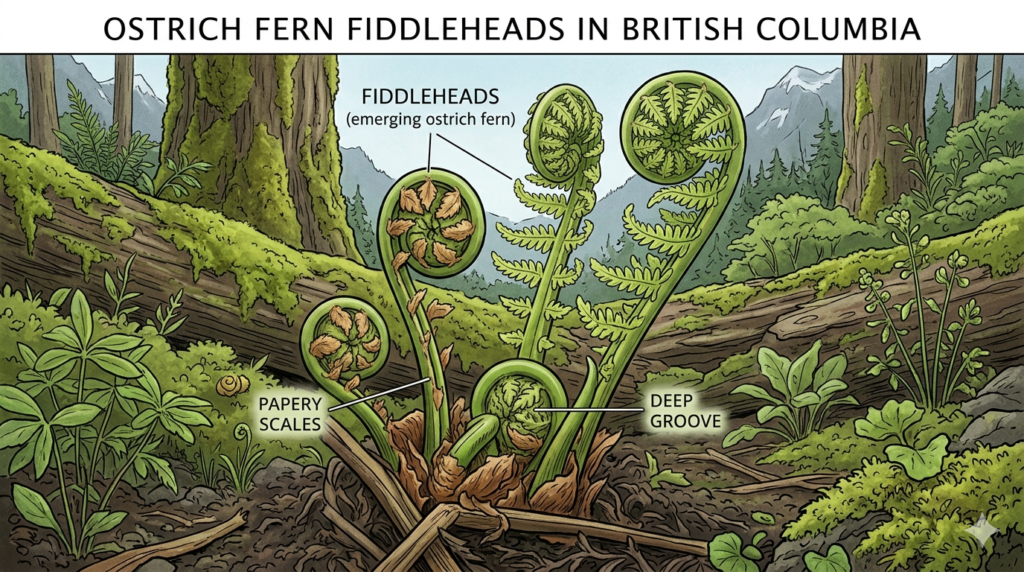 Created using Gemini
Identification: Not All Fiddleheads Are Edible
In British Columbia, the only fern widely considered safe to eat is the ostrich fern. It’s more common in eastern Canada but can be found in parts of BC, particularly in moist, shaded areas near rivers and floodplains.
Advertisement
Look for these key features:
- Smooth, bright green coils (no fuzz or hair)
- A deep, U-shaped groove on the inside of the stem
- Brown, papery scales that rub off easily
- Growing in a tight cluster from a central crown
Advertisement
Avoid bracken fern, which is common in BC and has been linked to toxins and potential carcinogenic effects. When in doubt, don’t harvest.
When & Where To Find Them
Fiddleheads emerge for a short window – typically April to early June, depending on elevation and region. Prime habitat includes:
- Riverbanks and creek edges
- Floodplains and damp deciduous forests
- Areas with partial shade and rich soil
Timing is everything. Once the fronds begin to unfurl, they become tough and inedible.
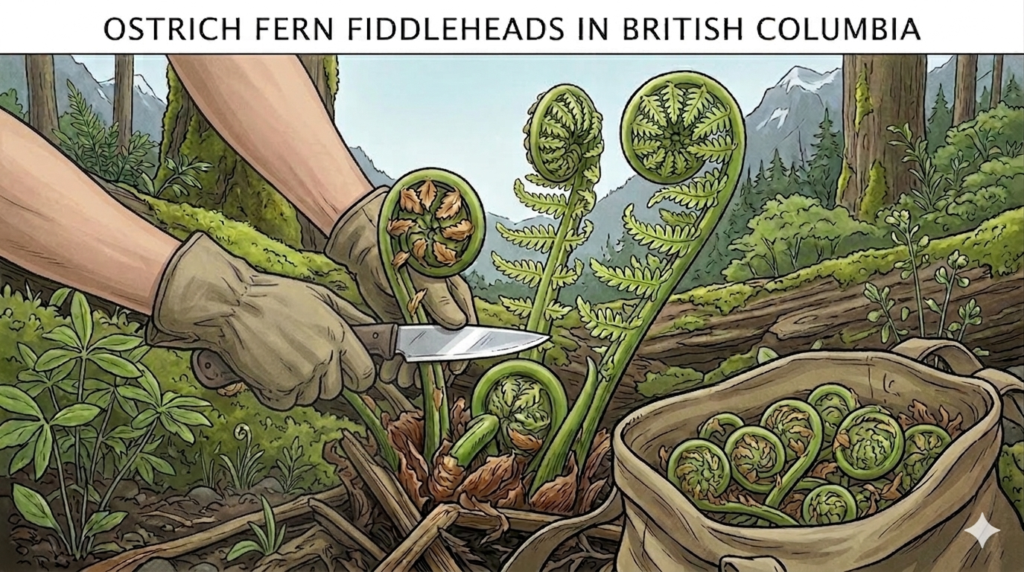 Created using Gemini
Sustainable Harvesting Practices
Fiddleheads are a renewable resource, but overharvesting can damage fern colonies. Follow these guidelines:
- Take no more than half of the fiddleheads from any one crown
- Leave smaller or newly emerging shoots untouched
- Use a knife or snap gently at the base to avoid uprooting the plant
- Tread lightly – these areas are often ecologically sensitive
Cleaning & Preparation
Fresh fiddleheads are often coated in dirt and brown, papery husks. Proper cleaning is essential:
- Rinse thoroughly in cold water
- Rub off any remaining brown scales
- Trim stem ends if needed
Never eat fiddleheads raw. They must be cooked thoroughly to be safe.
Cooking: Simple & Seasonal
Health Canada recommends boiling fiddleheads for at least 15 minutes or steaming for 10–12 minutes before further cooking. This helps eliminate naturally occurring toxins that can cause gastrointestinal illness.
After pre-cooking, try:
- Sautéing in butter with garlic and a squeeze of lemon
- Tossing into pasta or risotto
- Serving as a simple side with salt and pepper
Their flavour is often compared to a mix of asparagus and green beans, with a hint of nuttiness.
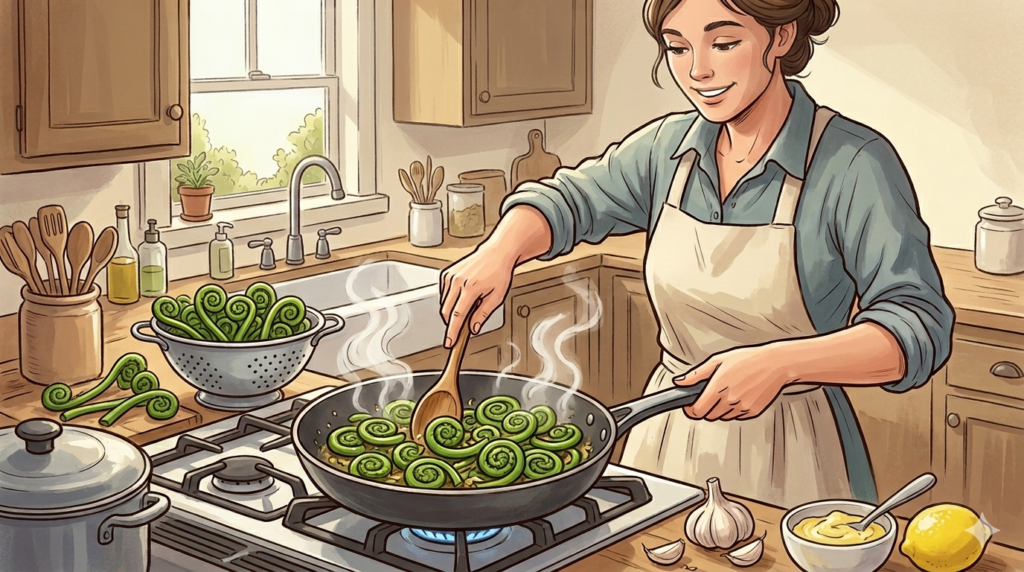 Created using Gemini
Health Considerations & Warnings
Even properly identified fiddleheads can cause illness if undercooked. Reported symptoms include nausea, vomiting and diarrhea. To reduce risk:
- Always cook thoroughly before eating
- Avoid consuming large quantities at once
- Refrigerate promptly and use within a few days
Some people may be more sensitive than others, so try a small portion first.
Final Thoughts
Foraging fiddleheads is a rewarding way to connect with BC’s spring landscape, but it comes with responsibility. Accurate identification, respectful harvesting and proper cooking are essential – not just for your safety, but for preserving this seasonal delicacy for years to come.