

Most outdoors people who spend time in bear country know one rule by heart: never keep food in your tent.
Advertisement
So, before bed, the chips go back in the truck. The cooler gets locked up. Supper scraps make it into the garbage. Then you crawl into your tent with a tube of toothpaste, deodorant, sunscreen, bug spray and maybe the hoodie you wore while frying dinner.
Advertisement
Technically, the food is gone.
Advertisement
The attractants aren’t.
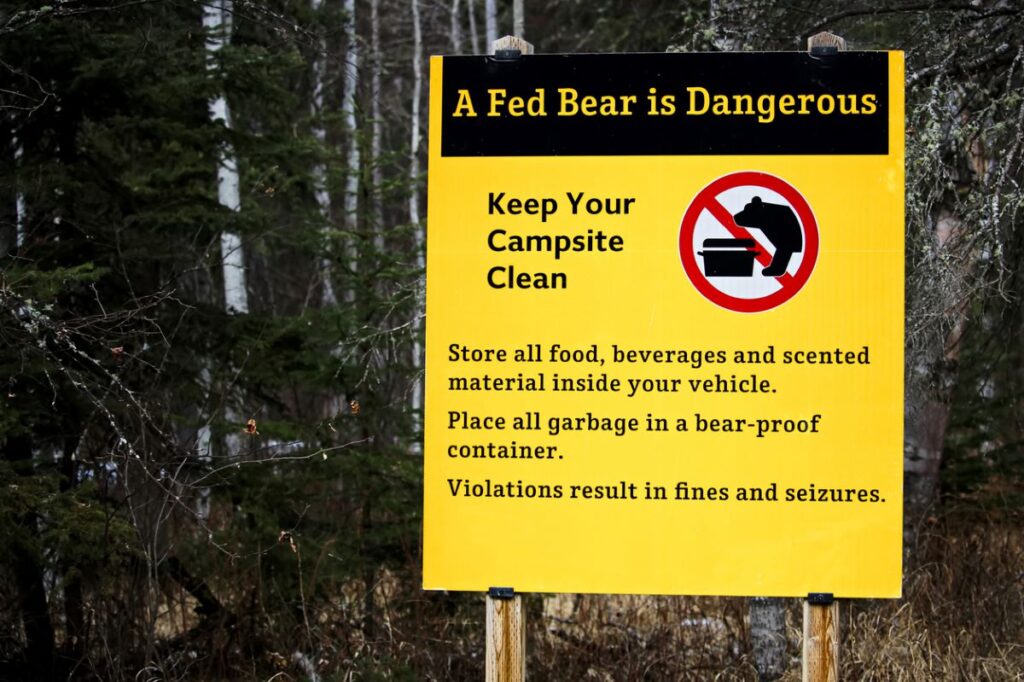 Photo by iStock
BC Parks’ current wildlife-safety guidance makes an important distinction that is easy to overlook: food is only one category of wildlife attractant. Bears and other animals may also investigate garbage, toiletries, cooking equipment and other scented items. BC Parks tells campers to secure all attractants whenever they are sleeping or away from camp — even if they leave for only a minute.
In other words, “no food in the tent” is an incomplete rule.
A better one is: no attractants in the sleeping area.
Your Toothpaste Counts
Some attractants are obvious. A package of bacon left on a picnic table is an invitation no experienced camper should need explained.
A toothbrush is easier to forget.
WildSafeBC warns that anything with an odour can attract wildlife and specifically includes deodorant, toothpaste and citronella alongside food, garbage, pet food and recyclables. BC Parks includes toiletries, sunscreen and bug spray, and advises campers against bringing scented products such as candles and perfumes into camp.
At Bowron Lake Park, BC Parks even addresses deodorant directly in its camping FAQ. The answer to “Will deodorant attract bears?” is “Yes, possibly,” noting that bears are curious and may investigate unusual odours. Campers are advised to store odorous items in the bear-proof caches provided at campsites.
That does not mean a bear mistakes your toothpaste for a tube of dinner. An attractant does not have to be edible to prompt an animal to investigate a smell.
And once a bear starts investigating campsites, the stakes can rise quickly if it succeeds in finding an actual food reward.
BC Parks distinguishes between habituation — becoming accustomed to the presence of people — and food conditioning, which occurs when a bear obtains human food or garbage and begins associating people or human-use areas with food. Food-conditioned bears may begin approaching campers or hikers and can become increasingly difficult to manage.
Preventing that first payoff is much easier than trying to change the behaviour afterward.
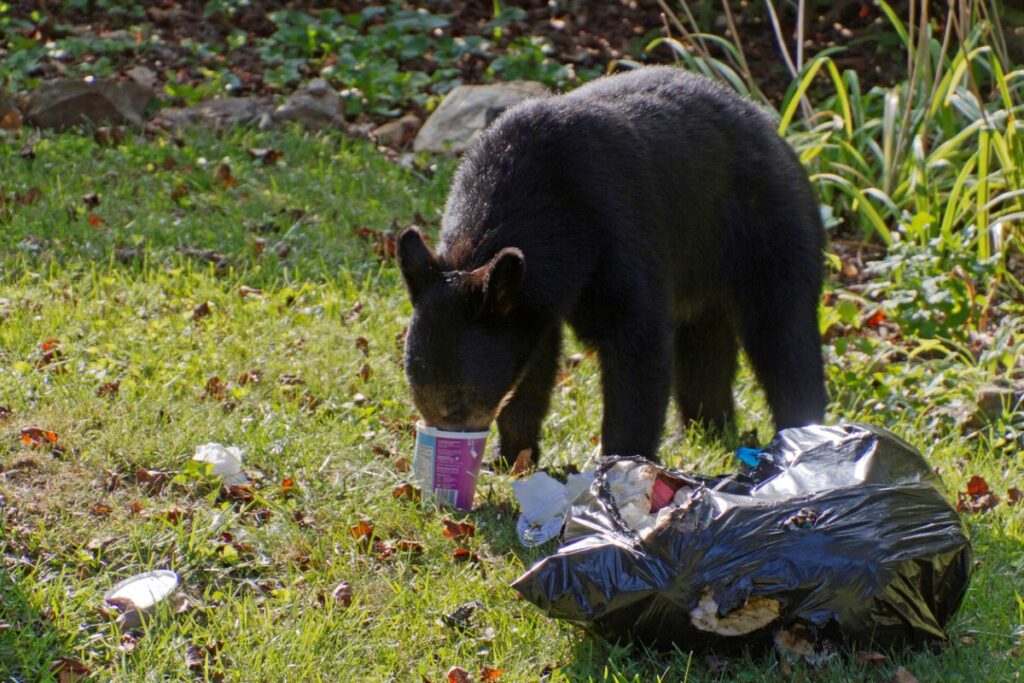 Photo by iStock
The Clean Frying Pan Still Goes Away
Another common mistake is assuming an item stops being an attractant once it has been washed.
Not necessarily.
BC Parks lists dishes and pots whether clean or dirty, along with camp stoves and barbecues, also whether clean or dirty. Parks Canada’s Bare Campsite Program uses the same approach: food, garbage, coolers, dishes, pots, pet bowls, bottles, cans, barbecues, stoves, toiletries and anything associated with food preparation must be secured when not in use.
Empty doesn’t necessarily mean safe, either.
An empty cooler can retain food odours. So can a pop can, dog bowl, food wrapper or recycling container. A pan that looks spotless to us may still carry scents detectable to wildlife.
Cooking grease deserves particular attention. Golden Ears Park’s Bear Safety and Wildlife Attractant Management Code of Conduct specifically lists burnt food or grease in fire pits among bear attractants. It also prohibits cooking or bringing attractants into tents and other soft-sided sleeping structures.
That makes the campfire a poor substitute for a garbage bin. Tossing fatty scraps or food-covered packaging into the fire does not necessarily eliminate the odour — and partially burned food left in a fire ring can become another reason for an animal to visit after everyone has gone to sleep.
Grey water matters for the same reason. Parks Canada directs frontcountry campers to dispose of dishwater in designated sinks, campground toilets or sani-dumps rather than pouring it onto the ground.
Even Your Cooking Clothes Can Carry The Message
One of the more surprising items on BC Parks’ attractant list isn’t a piece of camping equipment at all.
It’s your clothing.
BC Parks identifies clothes worn during cooking as a potential wildlife attractant, while WildSafeBC advises backcountry campers to avoid sleeping in the clothing they cooked in.
Anyone who has come home from a campfire smelling like smoke and grilled burgers already understands why. Fabric picks up odours.
For a frontcountry weekend, that may simply mean being conscious of a heavily food-scented jacket before tossing it into the tent. On a longer backcountry trip, having a cooking layer that stays with the rest of the secured attractants can be a sensible precaution.
And the list gets stranger still.
BC Parks also includes petroleum products such as gasoline, diesel and motor-oil containers among items that should be secured.
The practical lesson is simple: don’t try to decide whether a bear would logically want to eat something. Think about whether the item has a noticeable odour or has been associated with food.
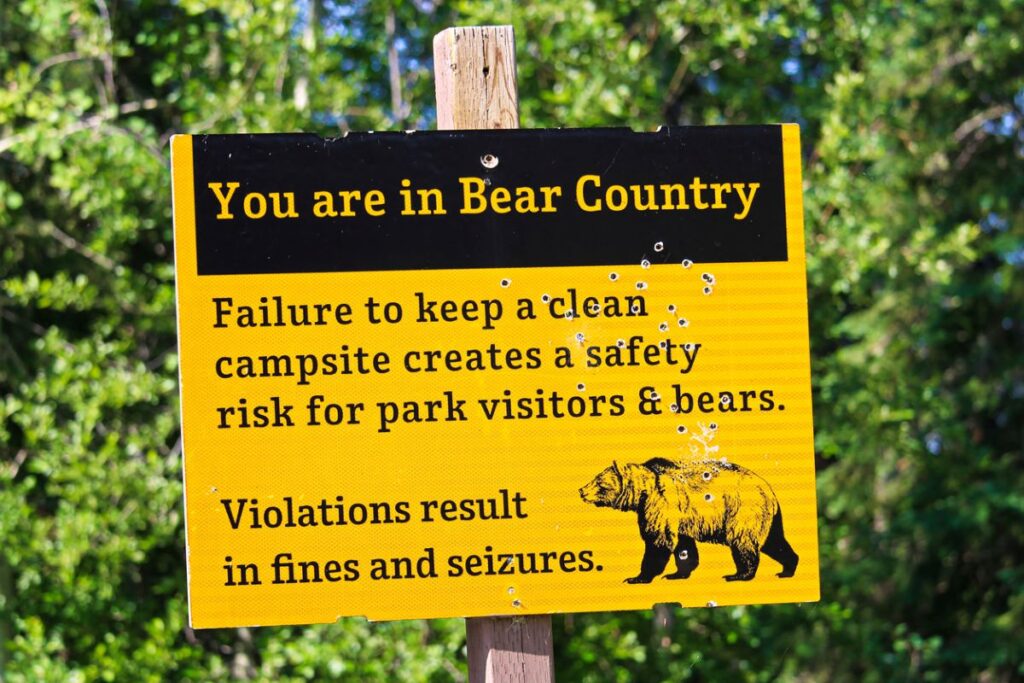 Photo by iStock
Don’t Forget The Dog
Camping with pets adds another set of attractants.
Dog kibble and treats are food, even if they aren’t yours. Bowls can retain odour after the meal is gone. BC Parks, Parks Canada and WildSafeBC all specifically identify pet food and pet bowls as items that need to be secured.
Don’t leave a bag of kibble beside the tent, in an open truck bed or tucked under a picnic table. Treat it exactly as you would your own food.
Pets themselves also complicate wildlife encounters. Parks Canada notes that pets can attract carnivores, while BC Parks advises keeping them leashed in wildlife areas.
Frontcountry: Keep It Bare When You’re Not There
In established BC campgrounds, proper storage is relatively straightforward.
BC Parks recommends putting attractants in a locked hard-sided vehicle or trailer, bear-resistant locker, bear-resistant container or other approved storage system. Food and scented items should never be left in a tent, hammock or soft-sided trailer.
And don’t assume you’ll be gone for too short a time to bother.
At Golden Ears, campers are directed not to leave attractants unattended even for one minute. The park’s rules allow staff to remove unsecured attractants, and violations can result in fines, eviction or further enforcement action.
BC Parks sums up the philosophy neatly: “Keep it bare when you’re not there… or sleeping.”
It’s a better mental checklist than looking around camp and asking only, “Did we put the food away?”
Backcountry Requires More Planning
Away from developed campgrounds, the same principle applies but storage becomes more complicated.
WildSafeBC recommends using bear-resistant storage provided at designated campsites whenever possible. In undeveloped areas, cooking, dishwashing and food storage should take place at least 50 metres from the sleeping area and preferably downwind. Food can be stored in a certified bear-resistant canister or, where appropriate, with a properly constructed food hang. WildSafeBC’s general hanging guidance calls for food to be at least four metres above the ground and three metres from the nearest tree.
But don’t assume those dimensions or methods apply everywhere. Parks, protected areas and individual backcountry routes can have their own mandatory storage systems. Some provide lockers or cables; others may require bear-resistant containers.
Check the rules for the specific area before leaving home.
One important item should remain accessible rather than disappearing with the food: bear spray. WildSafeBC advises bringing it into the tent at night with the safety clip in place and the canister secured in a holster so it remains available in an emergency.
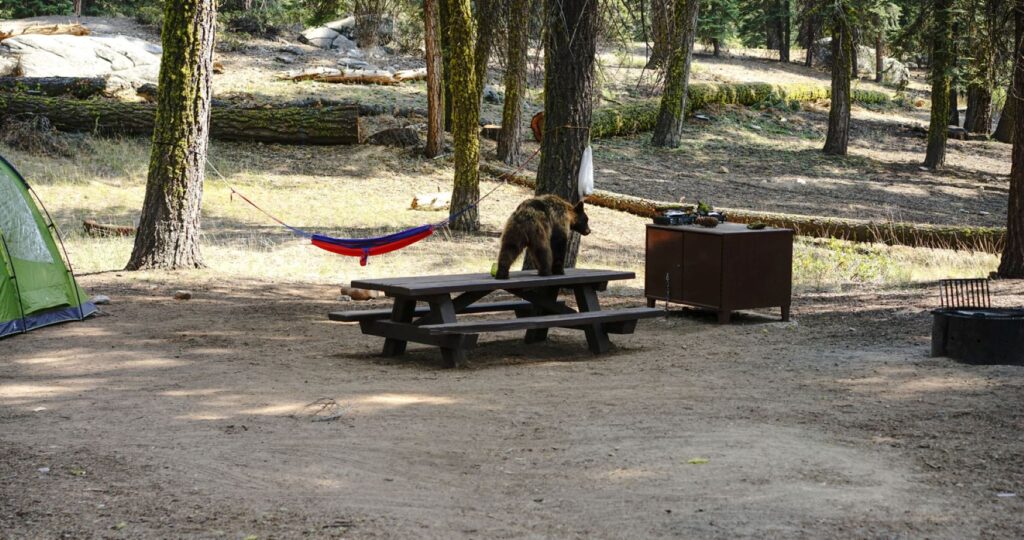 Photo by iStock
Think In Terms Of Smells, Not Meals
The familiar rule about food in tents isn’t wrong. It’s just too narrow.
Before bed — or before leaving camp for the trail, lake or beach — look around once more and think beyond what’s edible.
- Where is the toothpaste?
- Where is the sunscreen?
- Did the dog’s bowl get put away?
- Is the stove still sitting on the picnic table?
- What happened to the grease from dinner?
- Is there garbage in the fire ring?
- Did that cooking jacket end up inside the tent?
Camping responsibly in bear country doesn’t require being afraid of every smell in your gear. It requires recognizing that wildlife doesn’t divide our belongings neatly into “food” and “not food.”
A clean campsite is one where the things that might encourage an animal to investigate have been secured before it has the chance.
So keep the old rule if it helps: no food in the tent.
Just add the part that matters most: No attractants, either.