

Researchers have documented tenacibaculosis, a bacterial disease associated with skin and fin ulcers and fish mortality, in wild chinook salmon for the first time, according to a recent press release from the Pacific Salmon Foundation.
Advertisement
The discovery was made in BC’s Barkley Sound, on the west coast of Vancouver Island, during a 2022 study examining the effects of catch-and-release fishing. Of 99 chinook salmon sampled, 16 per cent showed signs of tenacibaculosis, with high associated mortality. The findings were published in Scientific Reports.
Advertisement
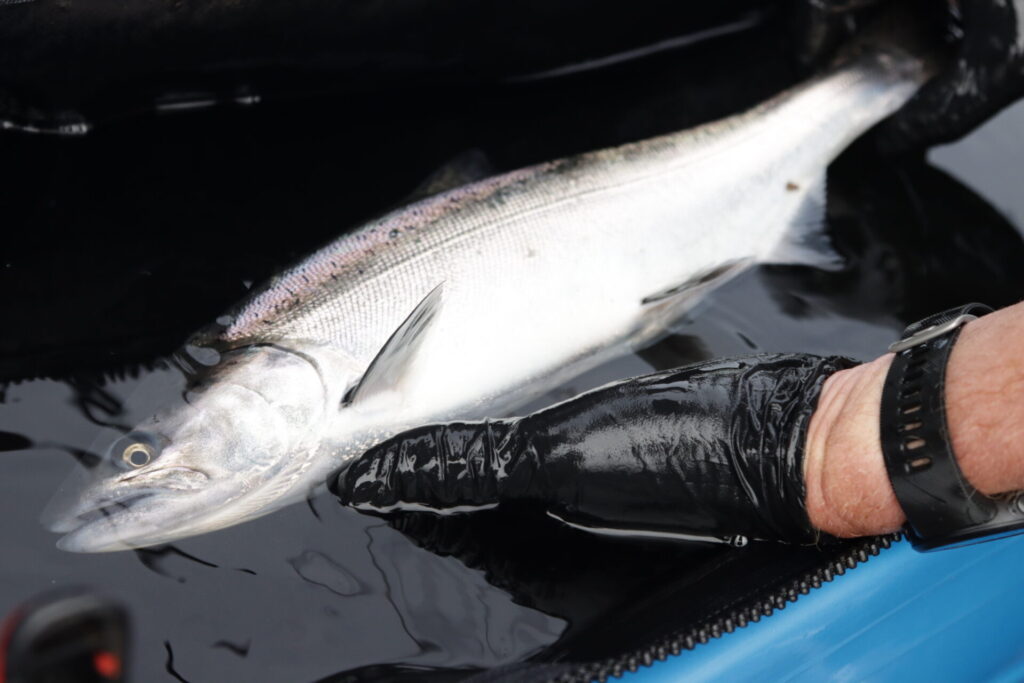 A Chinook salmon caught in the Barkley Sound for research. Photo: UBC Forestry and Environmental Stewardship’s Pacific Salmon Ecology and Conservation Lab
Researchers identified Tenacibaculum dicentrarchi, a marine bacterium found around the world, as the likely cause. Tenacibaculosis is well known in farmed salmon, but the study represents the first confirmed diagnosis in wild-caught fish.
Advertisement
“This is the first time tenacibaculosis has been diagnosed in wild-caught fish, providing empirical evidence that Tenacibaculum bacteria can negatively affect wild fish health and contribute to disease burden in BC wild salmon,” said Emiliano Di Cicco, a fish health researcher with the Pacific Salmon Foundation and lead author of the study.
The disease was discovered unexpectedly. Researchers with the University of British Columbia’s Pacific Salmon Ecology and Conservation Laboratory were holding marine-captured chinook for observation when some fish began developing unusual skin lesions and dying. The research team subsequently worked with the Pacific Salmon Foundation, Fisheries and Oceans Canada’s Pacific Biological Station, the University of Toronto and the University of California, Davis, to determine the cause.
Common signs of tenacibaculosis can include lethargy, loss of balance, abnormal swimming behaviour and ulcers on the skin, fins and mouth. The disease is one of the most common in farmed Atlantic salmon raised in open-net pens in BC.
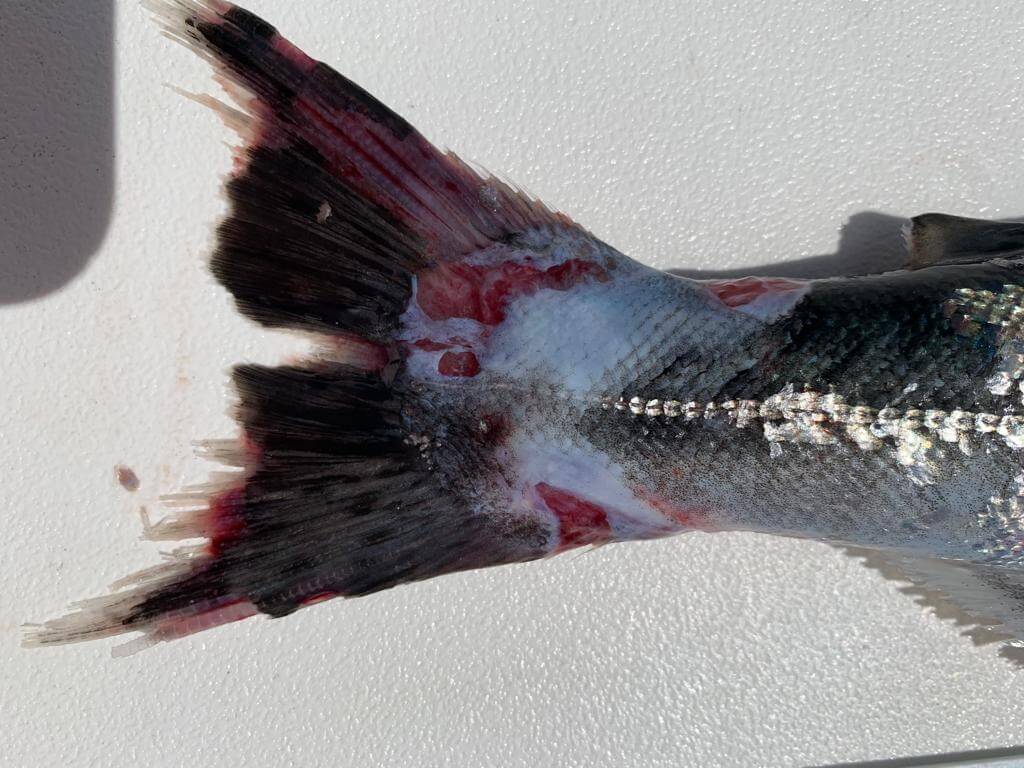 Physical signs of tenacibaculosis include erosion and ulcers in the gills, skin and fins. Photo: Emiliano Di Cicco
Researchers noted that T. dicentrarchi occurs naturally in the ocean, although previous research has found the bacteria can become more concentrated around open-net pen salmon farms. They also cautioned that handling during capture and the study’s holding period may have damaged the protective mucus layer on the fish, potentially increasing their susceptibility to infection.
The researchers say further study is needed to determine what causes tenacibaculosis to develop in wild salmon and how the fish become infected.