

Ice fishing in BC can be incredible – quiet lakes, hungry trout and kokanee and a true winter reset. But it’s also one of the few fishing styles where the “water hazard” is literally under your feet. The key to staying safe is understanding one simple truth: Ice is never uniform. Thickness can change within a few steps – especially in a province full of springs, inflows/outflows and wildly variable winter weather.
Advertisement
Below is a practical, BC-specific safety guide you can actually use.
Advertisement
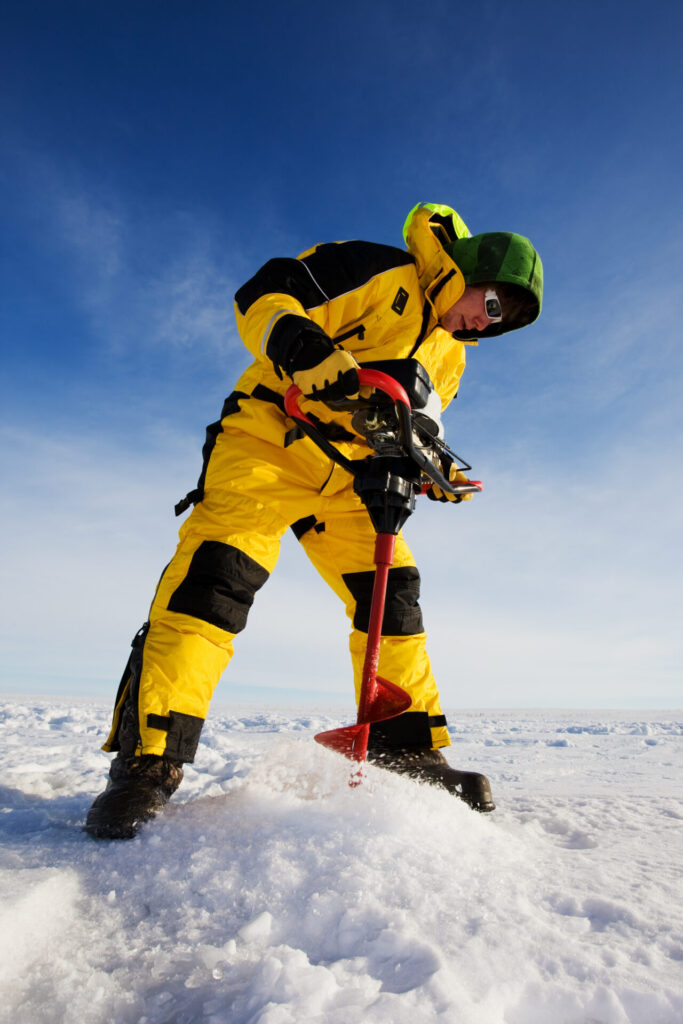 Photo by iStock
1) Know What “Safe Ice” Means (& What It Doesn’t)
Most public safety agencies use similar minimums for new, clear, hard ice:
- 10 cm (4 in): walking/cross-country skiing/ice fishing
- ~12 cm (5 in): snowmobile/ATV
- 20-30 cm (8-12 in): small car/pickup
Advertisement
Two crucial caveats:
- These numbers assume good-quality, clear ice (not slushy “white” ice.)
- Even at the “right” thickness, no ice is risk-free – conditions vary across a lake and day-to-day.
The rule I trust most: Treat those thickness numbers as a minimum starting point, not a guarantee.
2) Trouble Spots That Fool People Every Winter
These are the places that most often create unexpectedly thin ice:
- Inlets, outlets, narrows and anywhere water moves (current eats ice from below.)
- Freshwater springs – common on BC lakes and infamous for keeping ice thin or creating “soft spots” that snow can hide.
- Snow-covered ice: Snow insulates, slowing thickening, and it also hides cracks, holes and spring areas.
- Early season and late season: Warming days, rain events and “candled” ice in spring can fail fast even if it looks solid.
If you see open water, pressure ridges, flooded slush or multiple freeze/thaw cycles – assume conditions are deteriorating.
3) How To Check Ice Thickness The Right Way
“Someone else is out there” is not a test.
Do this instead:
- Check local intel first: Resort owners, local fishing groups and any posted signage. (Then still verify yourself.)
- Bring a spud bar/ice chisel (best for early season) and/or an auger.
- Test often as you move – especially if you’re heading toward a drop-off, narrows or an inlet/outlet area.
- Measure the thickness of the solid clear ice, not the slush layer.
GoFishBC even recommends a simple progression: if nobody’s out yet, start cautiously, drill a test hole and physically verify the thickness before committing to a spot.
4) The “Ice-Fishing Safety Kit” That Matters
If you only upgrade a few things, make it these:
- Floatation: A lifejacket over your winter gear or a float suit. In cold water, buoyancy buys time.
- Ice picks on a cord around your neck (so you can self-rescue if you break through.)
- Throw rope/rescue bag (and keep it accessible, not buried in a sled.)
- Cleats for glare ice (falls and head injuries are a big, boring, preventable risk.)
- Phone in a waterproof pouch and a power bank (cold kills batteries.)
- First aid and fire kit (lighter/matches in waterproof container, emergency blanket.)
For groups/families: consider a buddy system and stay spread out while travelling (not clustered.) Workplace ice guidance also emphasizes not working alone and keeping distance between people on questionable ice.
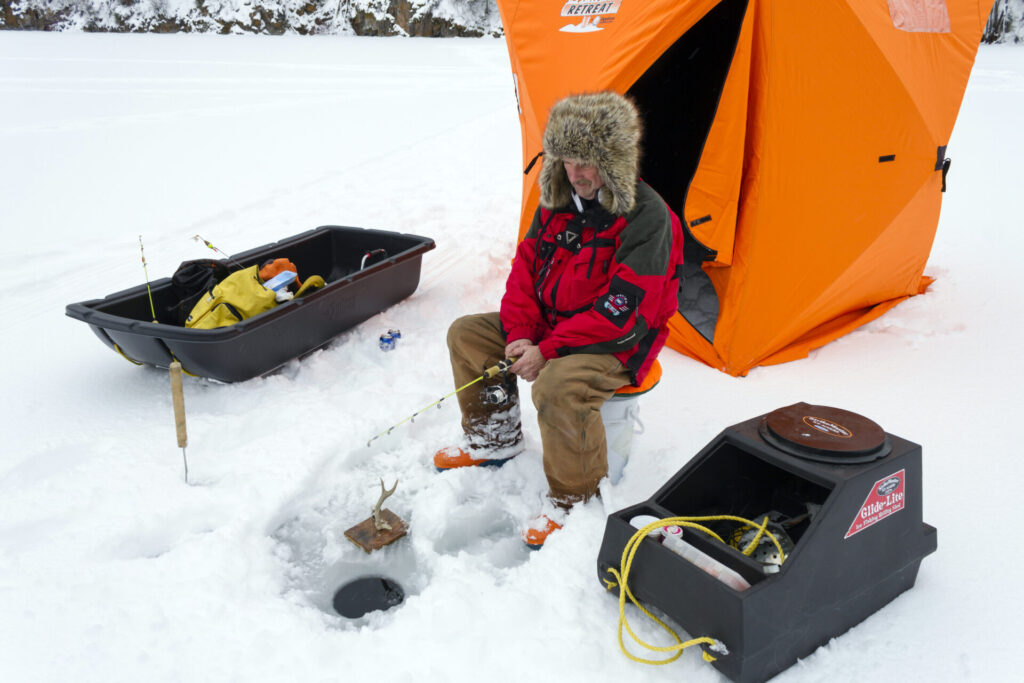 Photo by iStock
5) If You Fall Through: What To Do In The First Minute
Cold-water immersion isn’t just “hypothermia later.” The most immediate danger is cold shock – a sudden gasp and uncontrollable breathing that can happen right away. The Canadian Safe Boating Council notes cold shock passes in about one minute, and the priority is controlling your breathing and keeping your airway clear.
A practical sequence:
- Don’t panic – fight for breathing control first.
- Turn back toward the direction you came from (that ice supported you.)
- Use ice picks (or elbows) to kick and slide your chest onto the ice.
- Roll away from the hole – don’t stand immediately – until you’re well clear.
- Get to shelter, remove wet clothing if possible, warm gradually and seek help.
Transport Canada’s cold-water survival resources emphasize that cold water rapidly reduces co-ordination and strength – self-rescue gets harder quickly, so early action matters.
6) Ice Fishing-Specific Hazards People Forget
Hole safety (for you and others)
- Keep holes visible and organized; cover or mark them when moving spots.
- Don’t leave a “minefield” of old holes – especially near access points.
Augers and blades
- Treat augers like power tools: blade guards on, hands clear, stable stance and keep kids well back.
Heaters and carbon monoxide
If you’re using a heated shelter:
- Ventilate. Any fuel-burning heater can produce carbon monoxide.
- Keep a CO alarm in the shelter (small, cheap and worth it.)
Alcohol and “warming up”
Alcohol increases risk because it dulls judgement and can worsen cold exposure decisions. If you want a celebration, save it for after you’re off the ice.
7) Don’t Forget The Legal Basics (& Why They’re Relevant To Safety)
Before you go, make sure you’re fishing legally – because people who ignore regs also tend to ignore safety.
- BC’s freshwater rules are published in the Freshwater Fishing Regulations Synopsis (2025–2027), and the province posts regulation resources and updates online.
Even if you “know the lake,” always re-check: seasons and lake-specific rules can change between years.
8) A Quick Pre-Trip Checklist
Before leaving home
- Check forecast and recent temps (warming trend = higher risk).
- Tell someone: where you’re going, when you’ll be back.
- Pack: floatation, ice picks, rope, cleats, lights, first aid.
At the lake
- Confirm access is safe.
- Test ice early and often; avoid springs/inlets/outlets.
- Keep spacing while travelling.
While fishing
- Keep holes marked, shelter ventilated, and gear tidy (trip hazards matter).
When in doubt
- Don’t go – or move to a known-safe managed access point (resorts often have better local intel than random shoreline entries.)