

On a calm winter morning in coastal British Columbia, the shoreline can look almost empty – until the tide turns. Suddenly the mudflats “wake up:” ripples of small sandpipers appear as if the ground is moving, plovers stand like watchful sentries above the wrack line and dark turnstones work the rocks like little crowbars. While many shorebirds are famous for epic Arctic-to-tropics migrations, a surprising number spend the winter right here in BC, taking advantage of relatively mild coastal temperatures and food-rich intertidal habitats.
Advertisement
Why BC Matters In Winter
Advertisement
Winter shorebird life in BC is built around one thing: the intertidal buffet. Each tide exposes vast feeding areas – mudflats, sand beaches, eelgrass beds and rocky shelves – packed with worms, clams, snails, crustaceans and other invertebrates. BC’s major estuaries and protected bays can host huge numbers of birds through the cold season, and the Lower Mainland portion of the Fraser River estuary complex (including Boundary Bay and nearby management areas) is widely recognized for exceptionally large wintering bird concentrations.
Advertisement
Winter also changes shorebird behaviour in ways that make them fascinating to watch. Birds often feed in tight, co-ordinated flocks to reduce predation risk, and they shift between feeding sites and high-tide roosts (safe places to rest when the flats are underwater.) Those roosts – quiet beaches, saltmarsh edges, fields or sheltered shorelines – can be just as important as the feeding grounds.
Where To Look: Classic Winter Habitats & Hotspots
You can find winter shorebirds anywhere there’s tide, mud, sand or rock – but a few habitat types consistently deliver:
- Large estuaries and deltas (mudflats and saltmarsh): Think the Fraser River estuary complex and other major river mouths. These areas are internationally important for migrating and wintering shorebirds.
- Protected bays and lagoons (sheltered feeding/roosting): These often concentrate birds during storms and high tides.
- Open sandy beaches (surf-zone specialists): Great for “wave-chasers” like sanderlings.
- Rocky shorelines and kelp-covered benches (intertidal pickers): Turnstones and surfbirds love these.
If you’re planning a winter shorebird day trip, the Fraser River estuary/Boundary Bay area is a cornerstone destination, with BC’s best-known concentrations. Vancouver Island also offers excellent winter shorebirding along beaches, headlands and lagoons, where rocky-shore species can be especially rewarding.
Meet The Winter Regulars: Species You’re Likely To See
Below are some of the most characteristic winter shorebirds in coastal BC (and why they’re worth your attention.)
 Dunlin
Photo by iStock
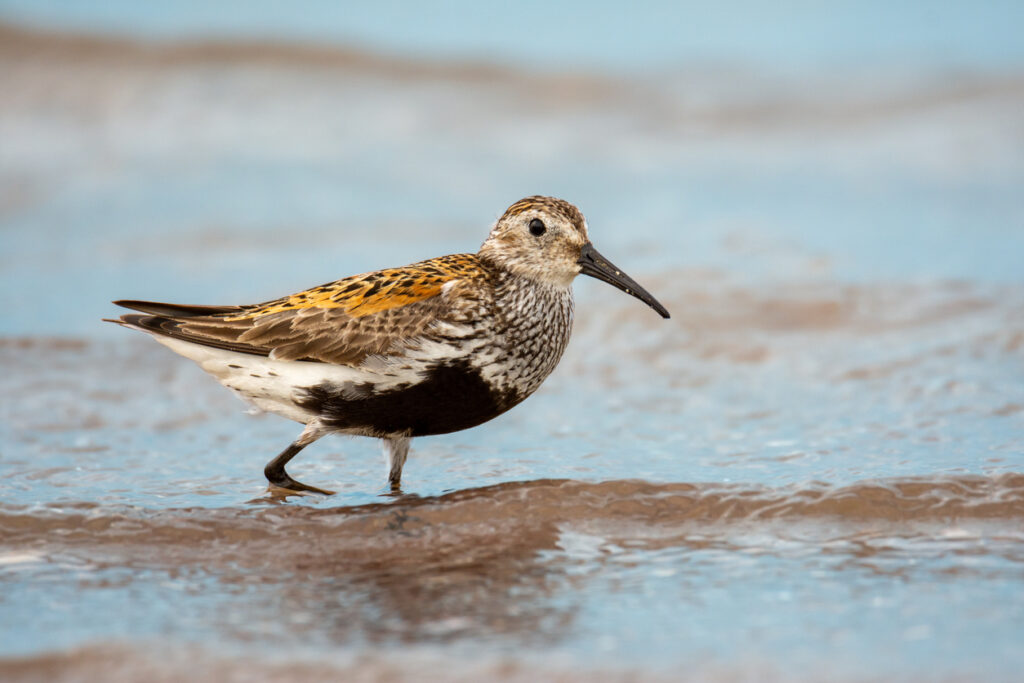
Dunlin: The Swirling “Smoke” Over The Flats
If winter shorebirds had a mascot in southern coastal BC, it might be the dunlin. They often form massive, tightly synchronized flocks that twist and flash silver above mudflats – an anti-predator strategy that’s as beautiful as it is practical. In the Fraser estuary, dunlin have been the focus of modern tracking work (e.g., Motus telemetry) and long-standing winter ecology research, underscoring how important these delta habitats are for the species.
ID tip: Look for a small, slightly “hunched” sandpiper with a distinctly downcurved bill. In winter, they’re mostly gray above and pale below.
 Black-bellied plover
Photo by iStock
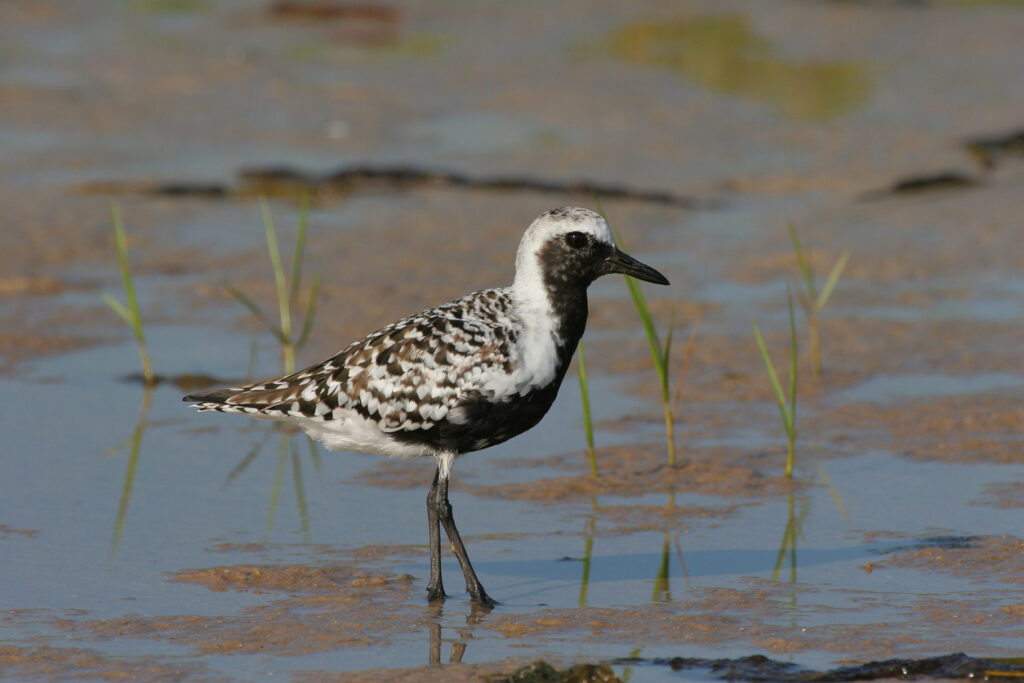
Black-Bellied Plover: The Big-Eyed Sentinel
The black-bellied plover is one of the larger shorebirds you’ll see in winter, often standing more upright than the smaller sandpipers. They’re classic “pause-and-pounce” feeders, watching for prey before making quick runs. In winter plumage, they’re gray and white with a clean, bright look.
In several BC regions, black-bellied plovers are considered reliable wintering shorebirds alongside dunlin and others.
ID tip: Chunky build, large dark eye, relatively stout bill; often found on beaches, mudflats and adjacent fields.
 Sanderling
Photo by iStock
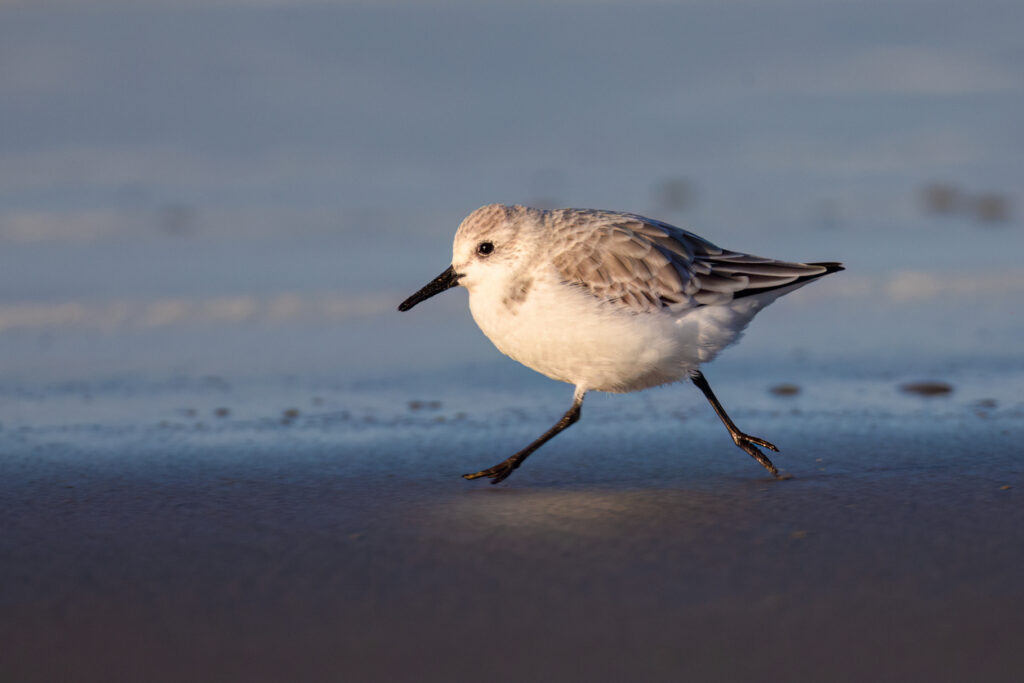
Sanderling: The Surf-Line Sprinter
The sanderling is famous for chasing waves – darting in as water retreats to grab prey, then sprinting back up the beach as the next wave rolls in. In winter, they’re pale, neat and fast-moving. BC winter birding resources regularly highlight sanderlings among the coastal shorebirds you can expect in the colder months.
ID tip: Small, bright sandpiper with no obvious hind toe; quick “sewing-machine” legs along the water’s edge.
 Black turnstone
Photo by iStock
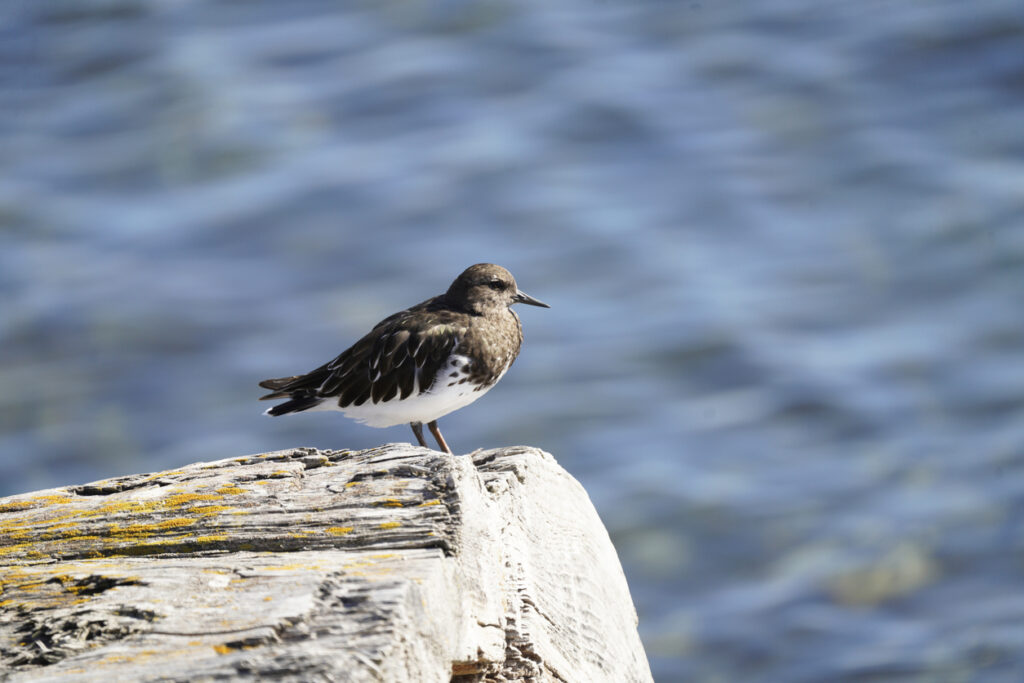
Black Turnstone & Surfbird: The Rocky-Shore Specialists
On rocky shorelines, winter can be peak season for birds that specialize in prying, flipping and picking through seaweed and barnacle zones. The black turnstone is a signature Pacific-coast species in winter, often in small groups working the wrack line and intertidal rocks. Surfbirds also patrol rocky benches and wave-washed edges, sometimes mixed with turnstones.
ID tip (black turnstone): Dark overall with contrasting white underparts and wing pattern; watch for the “turning” behaviour – flipping seaweed, small stones or shell pieces to uncover prey.
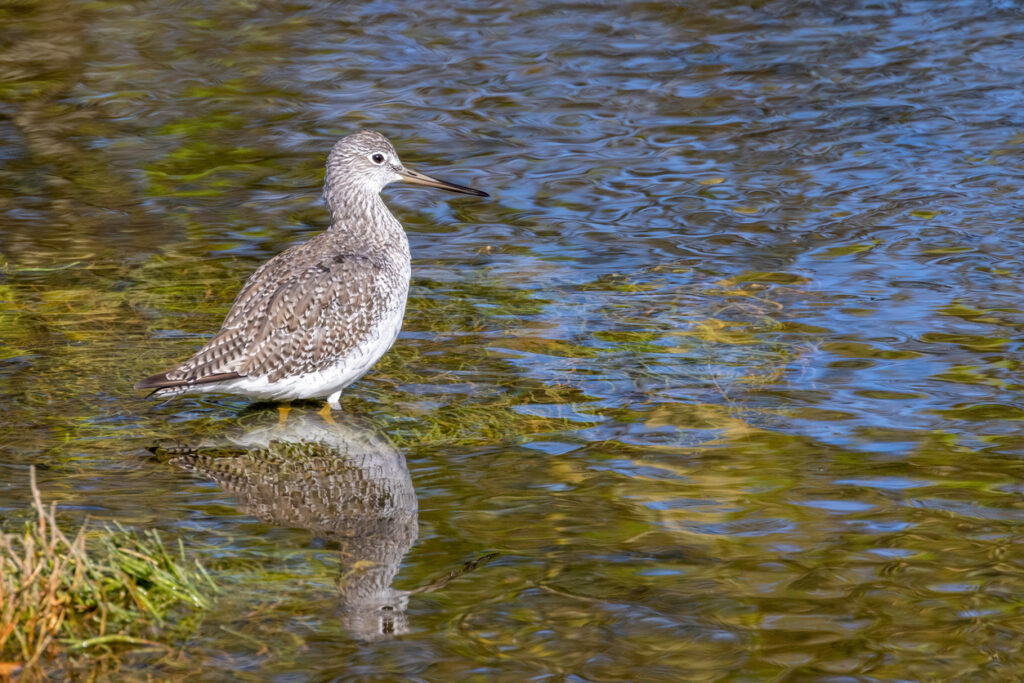 Greater yellowlegs
Photo by iStock
Greater Yellowlegs & Other Taller Waders
In some coastal and estuary-adjacent wetlands, you may also encounter greater yellowlegs in winter – long-legged, alert birds that wade in shallow water and often call loudly when flushed. Regional hotspot guides for BC list them among regular wintering shorebirds in certain areas.
The Winter Rhythm: Tides, Roosts & Predators
If you want to understand winter shorebirds, learn the tide schedule. Most birds feed most intensely on falling and low tides, then gather at roosts on high tides. Disturbance at roosts (people, dogs, drones) forces birds to burn precious energy repeatedly – energy they need to stay warm and survive winter storms. This is why many conservation strategies emphasize protecting both feeding and roosting habitats at key sites.
Predators shape shorebird behaviour, too. Raptors like peregrine falcons can trigger those dramatic dunlin “murmurations,” and mixed-species flocking is common because more eyes reduce risk.
Conservation: What’s Changing & Why It Matters
Shorebirds are a conservation concern across many regions, with documented declines in multiple species at broad (continental) scales. Canadian reporting has noted declining trends for several shorebirds, including species that occur on the Pacific coast in winter or migration.
In BC, habitat quality at major estuaries is a recurring theme. Ducks Unlimited Canada has highlighted long-term concerns and research in the Fraser River estuary, including reported declines in western sandpipers using Roberts Bank as a stopover site over recent decades – an example of how changes at key coastal sites can echo across the flyway.
The practical takeaway for birders and coastal visitors is simple: these places are not just local beaches. They’re links in a hemispheric chain of sites that connect the Pacific Flyway and beyond.
How To Watch Winter Shorebirds Responsibly (& See More)
- Time it with the tide: Visit mudflats on a falling tide; look for high-tide roosts as the water rises.
- Keep your distance: If birds stop feeding, bunch up or repeatedly fly, you’re too close.
- Leash dogs and avoid flushing flocks: Winter is an energy-budget season – every unnecessary flight costs calories. (Many key areas are also managed specifically for wildlife values.)
- Scan mixed flocks slowly: Winter groups can include common and uncommon together; patient scanning often reveals surprises.
- Contribute sightings: Platforms like eBird (and local BC birding networks) help track winter distribution and year-to-year changes – useful information for conservation planning.
A Winter Shoreline Worth Learning
Winter shorebirds are one of BC’s most accessible wildlife spectacles – no alpine hike required, just a shoreline and a tide chart. Whether you’re watching dunlin flocks twist above the flats at Boundary Bay, counting plovers on a windswept beach or tracking turnstones along kelp-strewn rocks, you’re seeing a living system that depends on healthy intertidal habitat and a little human restraint. And in the quiet of winter, when the coast feels wide open, that system is often closer – and more alive – than it first appears.