

When most British Columbians think about forests, they picture towering cedars, Douglas firs and hemlocks stretching across mountainsides. But some of the province’s most important forests grow beneath the waves.
Advertisement
Along British Columbia’s rugged coastline, vast underwater forests of giant kelp and bull kelp create one of the planet’s most productive marine ecosystems. These towering underwater canopies provide food, shelter and nursery habitat for countless species, from tiny crustaceans to salmon, rockfish and sea otters.
Advertisement
Yet many people pass over these marine forests without ever realizing they are there.
Advertisement
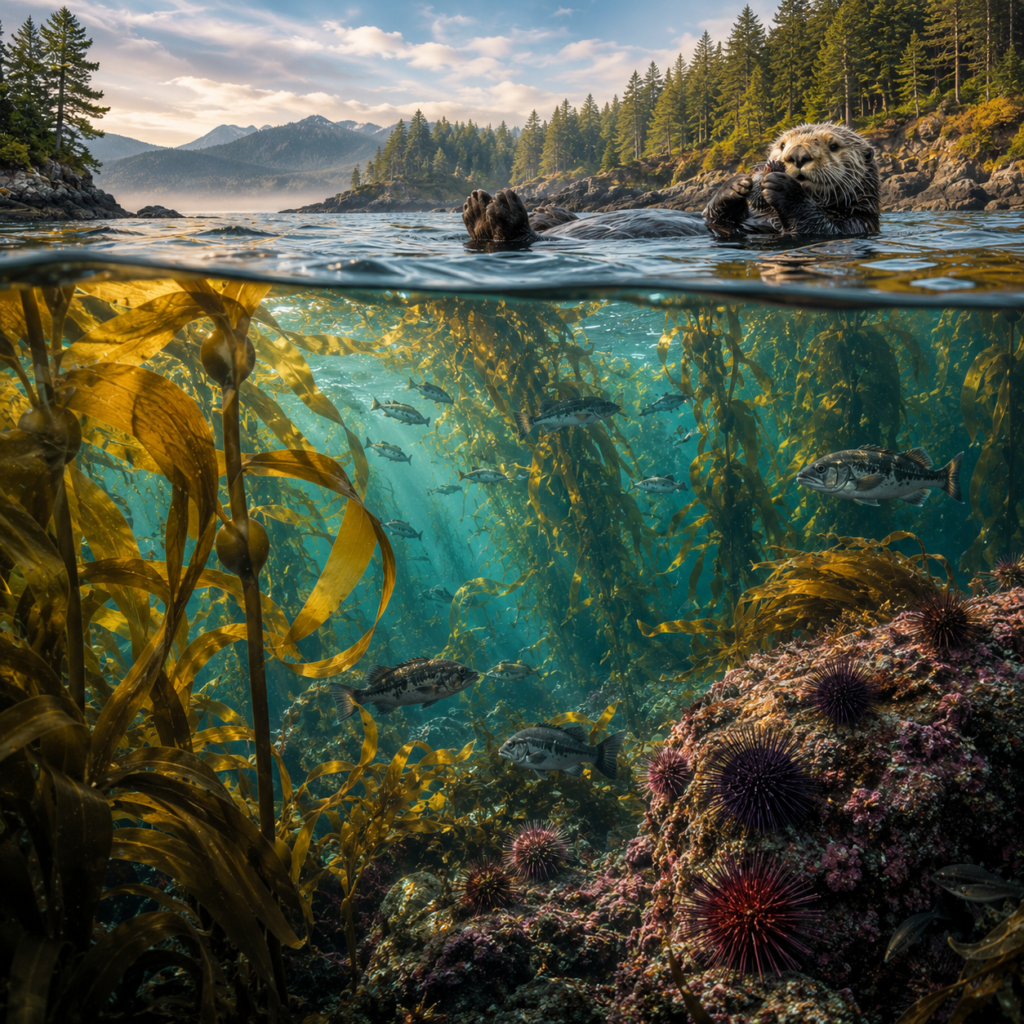 Illustration completed using OpenAI
The Rainforests Of The Sea
Kelp are large brown algae that thrive in cool, nutrient-rich coastal waters. Unlike plants, they do not have roots, stems or leaves. Instead, they anchor themselves to rocky seabeds using holdfasts and grow upward toward sunlight, sometimes reaching the ocean’s surface. In ideal conditions, some kelp species can grow more than half a metre per day.
The dense underwater canopies they create are often compared to terrestrial forests because they provide complex three-dimensional habitat for hundreds of marine species. Like forests on land, kelp forests produce oxygen, absorb carbon and create shelter for wildlife.
Along British Columbia’s coast, bull kelp and giant kelp dominate many nearshore environments, particularly around Vancouver Island, the Central Coast and parts of Haida Gwaii. These habitats support an astonishing diversity of life.
A Nursery For Marine Life
For many fish species, kelp forests function as underwater nurseries.
Juvenile salmon, rockfish, perch and greenlings use the dense fronds as refuge from predators while feeding on the abundance of small organisms that live among the kelp. Herring frequently spawn on kelp, attaching their eggs to the blades where they are protected from currents and predators.
The forests also support a rich food web. Small crustaceans, snails and other invertebrates feed on living and decaying kelp, while larger fish and marine mammals feed on those animals. Researchers studying Vancouver Island’s west coast have found that larger kelp forests support greater abundance of fish and other marine life.
For anglers, healthy kelp forests often signal productive fishing grounds. Rockfish, lingcod and salmon frequently congregate near these underwater structures because of the shelter and feeding opportunities they provide.
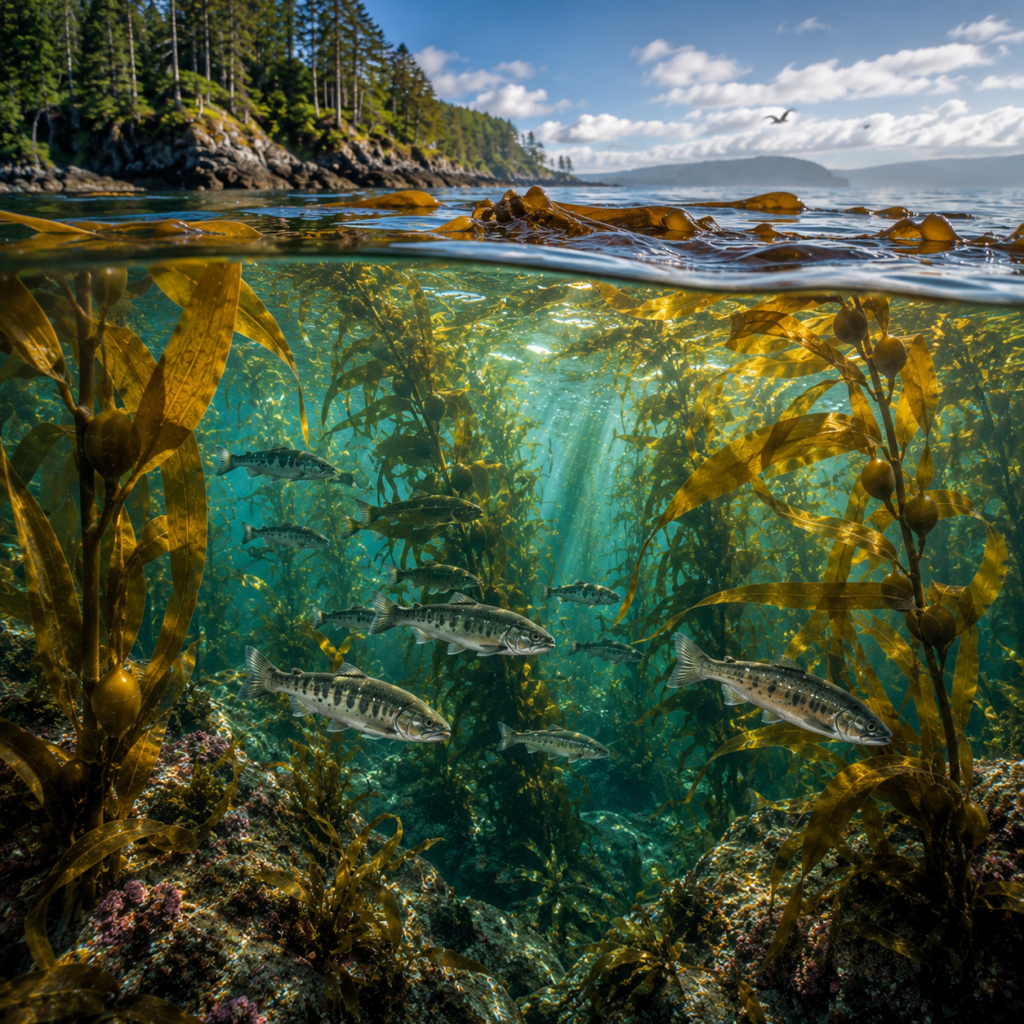 Illustration completed using OpenAI
The Sea Otter Connection
One of the most fascinating stories unfolding along British Columbia’s coast involves the return of the sea otter.
Sea otters are considered a keystone species because they have an outsized influence on the ecosystems around them. Their favourite prey includes sea urchins, which are voracious grazers of kelp. When otter populations decline, sea urchin numbers can explode, stripping reefs of kelp and creating what scientists call “urchin barrens”—rocky seascapes with little remaining marine vegetation.
As sea otters have recovered in parts of British Columbia following reintroduction efforts, many coastal ecosystems have undergone dramatic changes. Researchers have documented significantly larger kelp forests in areas where sea otters have re-established. In some locations, kelp forests are many times larger than in areas where otters remain absent.
The effects ripple through the food web, benefiting fish, invertebrates and other marine species that depend on kelp habitat.
Threats Beneath The Surface
Despite their importance, British Columbia’s kelp forests face growing challenges.
Marine heat waves and rising ocean temperatures can stress canopy-forming species such as giant kelp and bull kelp. Prolonged warm-water events can reduce growth rates or eliminate entire kelp beds. Coastal development, pollution and changing ecological balances also place pressure on these ecosystems.
In some areas, the decline of key predators such as sea otters and sunflower sea stars has allowed sea urchin populations to increase, making it difficult for kelp forests to recover naturally.
Scientists continue to monitor kelp forests using satellite imagery, underwater surveys and increasingly sophisticated artificial intelligence tools that help track changes across large stretches of coastline.
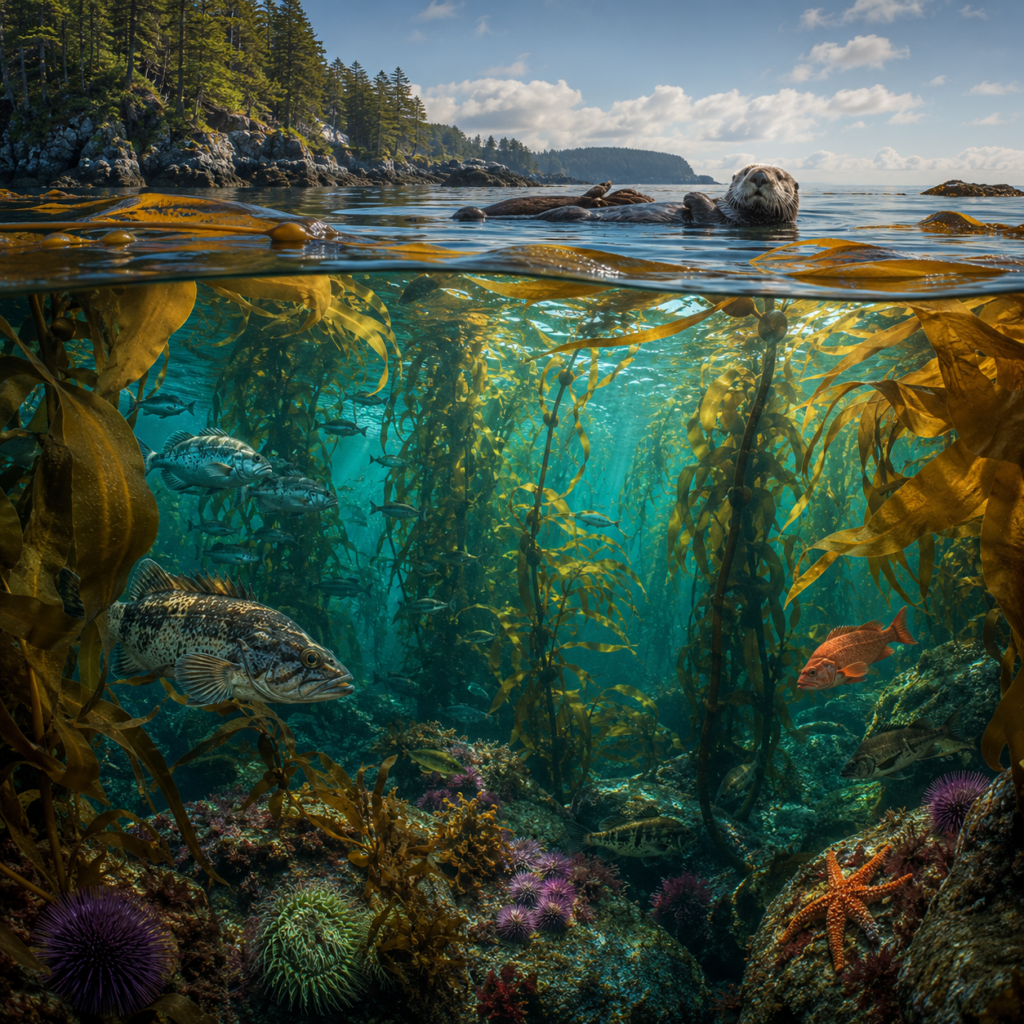 Illustration completed using OpenAI
Restoring Underwater Forests
The good news is that restoration efforts are underway throughout coastal British Columbia.
Indigenous Nations, conservation organizations and researchers are working together to restore degraded kelp habitats. In areas such as the Broken Group Islands, restoration projects are exploring ways to rebuild kelp forests and improve ecosystem resilience. These initiatives recognize the ecological, cultural and economic importance of kelp to coastal communities.
Many restoration efforts focus on reducing sea urchin populations, monitoring kelp recovery and improving our understanding of how these ecosystems respond to environmental change.
Looking Below The Surface
For kayakers, anglers, boaters and coastal residents, kelp forests are often simply part of the scenery. Yet beneath the floating fronds lies a thriving ecosystem that supports much of the life found along British Columbia’s coastline.
These underwater forests help sustain fish populations, provide habitat for marine wildlife and contribute to the overall health of coastal ecosystems. They are as important to the Pacific coast as old-growth forests are to the province’s mountains.
The next time you paddle through a sheltered bay or drift past a patch of floating kelp, consider what lies below. Hidden beneath the surface is an entire forest teeming with life—one of British Columbia’s most remarkable natural wonders.