

For anglers on British Columbia’s rivers and coastlines, a missing adipose fin can tell an important story. Increasingly, it may tell the difference between a hatchery fish you can keep and a wild salmon that needs to be released.
Advertisement
The federal government has announced a major expansion in mass marking of hatchery-origin Chinook salmon in southern British Columbia – an effort aimed at improving conservation, strengthening fisheries management and supporting the long-term recovery of wild stocks.
“Pacific salmon are central to the cultural, ecological, and economic fabric of Canada’s West Coast. Expanding mass marking enhances our understanding of science, providing a clearer picture of wild salmon populations, and the performance of our hatcheries,” stated Joanne Thompson, minister of fisheries. “This supports better population management, can promote genetic diversity, and is one of the investments we are making so that these wild salmon runs can have the best chance at recovery and sustainability over the long-term.”
Advertisement
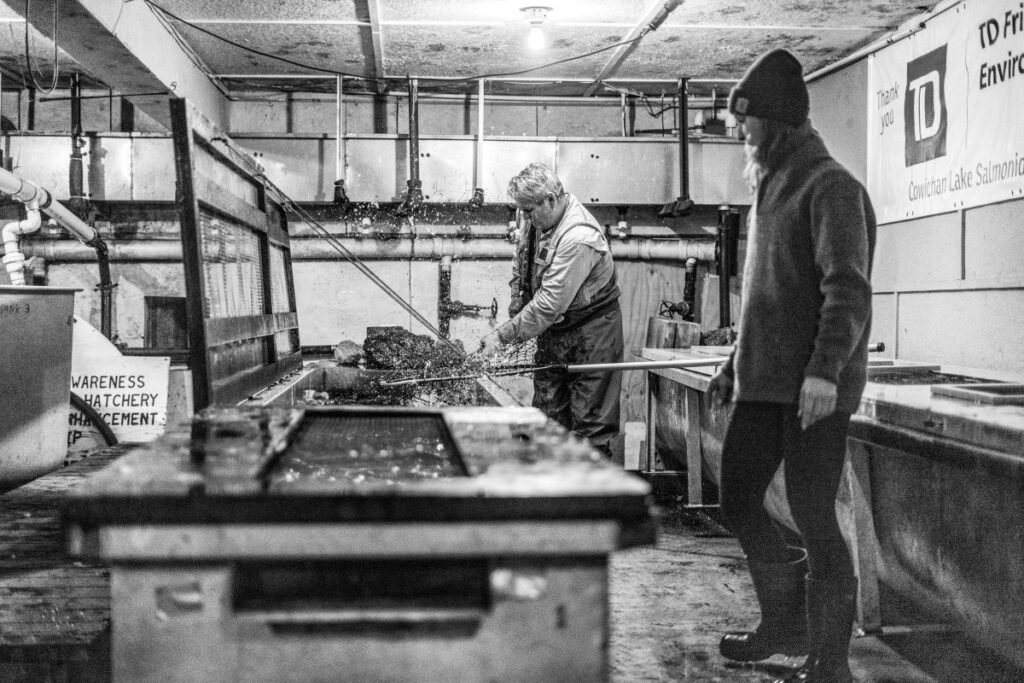 The Cowichan Lake Salmonid Enhancement Society
Photo by Chase White
Why Fin-Clipping Matters On The Water
Mass marking involves removing the small adipose fin located just above the tail of hatchery-raised salmon. The process does not affect the fish’s health or survival, but it creates a clear, visual way to distinguish hatchery fish from wild ones.
That distinction is critical.
Advertisement
For fisheries managers, it means better data on how hatchery and wild stocks are performing. For hatchery operators, it helps refine practices to limit interactions between hatchery fish and wild populations. And for anglers, it opens the door to more selective fisheries – targeting hatchery fish while protecting vulnerable wild runs.
In many Pacific jurisdictions – Washington, Alaska, Oregon and California – mass marking of Chinook is already standard practice. Canada, until now, has only marked a portion of its hatchery fish.
Scaling Up: From 40 Per Cent To 90 Per Cent & Beyond
Currently, about 40 per cent of hatchery-origin Chinook released in southern BC are marked. Fisheries and Oceans Canada plans to increase that number significantly, with a target of marking approximately 90 per cent by 2027 – and eventually all hatchery-produced Chinook in the region.
The expansion is supported through the Pacific Salmon Strategy Initiative (PSSI), a long-term federal investment focused on rebuilding salmon populations through science, monitoring and improved hatchery practices. A renewed $412.9 million commitment will fund additional mass-marking capacity, including specialized equipment and techniques designed to handle large volumes of fish efficiently.
DFO also plans to work with community hatcheries to increase marking rates where feasible and supported by science.
 The Cowichan Lake Salmonid Enhancement Society
Photo by Chase White
Better Data, Smarter Fisheries
Beyond the immediate benefits to anglers, expanded mass marking has broader implications for salmon conservation.
By clearly identifying hatchery-origin fish, fisheries managers can better monitor distribution and abundance, improve stock assessments and refine harvest strategies. In practice, that means a greater ability to direct fishing pressure toward hatchery fish – while minimizing impacts on wild populations that may be struggling to rebuild.
Mass marking also plays a role on the spawning grounds, helping reduce interbreeding between hatchery and wild fish and supporting the genetic diversity of wild stocks.
What It Means
For BC anglers, the expansion of fin-clipping could mean more opportunities in selective fisheries – particularly in areas where retention rules hinge on identifying hatchery fish.
It also underscores a growing shift in salmon management: one that leans heavily on science, monitoring and precision harvest to balance opportunity with conservation.
As more Chinook return to BC waters bearing the telltale clipped fin, the message is clear – knowing what’s on the end of your line has never mattered more.
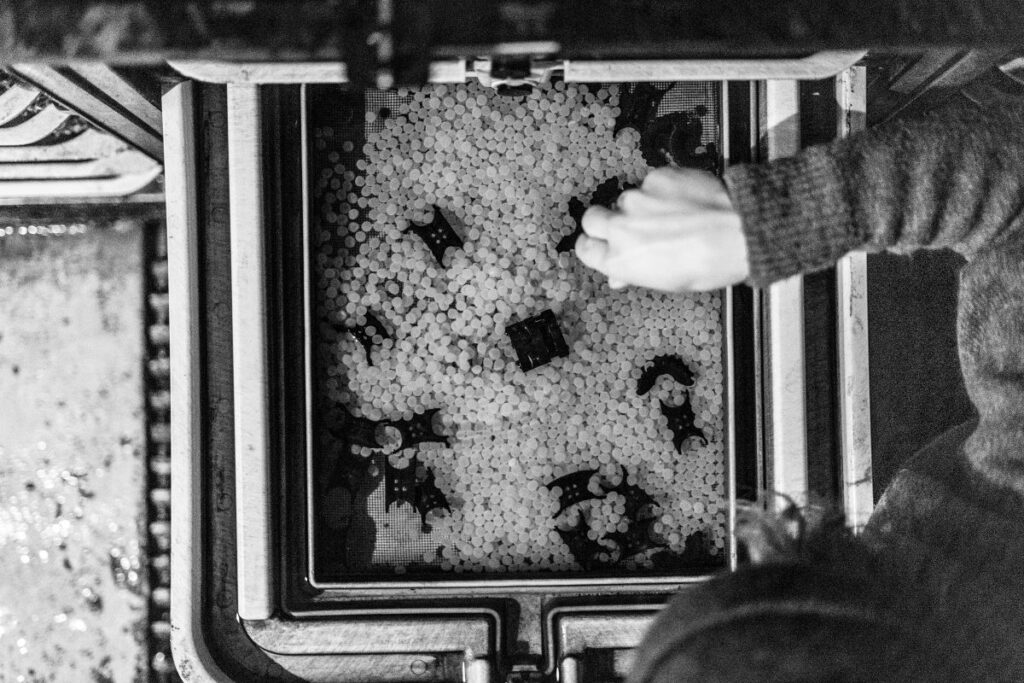 The Cowichan Lake Salmonid Enhancement Society
Photo by Chase White