

Along British Columbia’s coast, salmon fishing is as much about stewardship as it is about opportunity. In recent years, one management approach has become increasingly important in balancing those two goals: marked-select fisheries.
Advertisement
At first glance, the concept is simple – keep hatchery fish, release wild ones – but behind that simplicity is a carefully designed system rooted in conservation science, stock assessment and angler participation.
Advertisement
What Is A Marked-Select Fishery?
A marked-select fishery allows anglers to retain only salmon that have been “marked,” typically by removing the small fleshy adipose fin located between the dorsal fin and tail.
In British Columbia, this mark identifies fish that were raised in hatcheries. During the rearing process, hatchery salmon have their adipose fin clipped before release. When those fish return as adults, anglers can easily distinguish them from wild fish, which retain an intact adipose fin.
Advertisement
The goal is straightforward: direct harvest pressure toward abundant hatchery-origin fish while protecting vulnerable wild stocks.
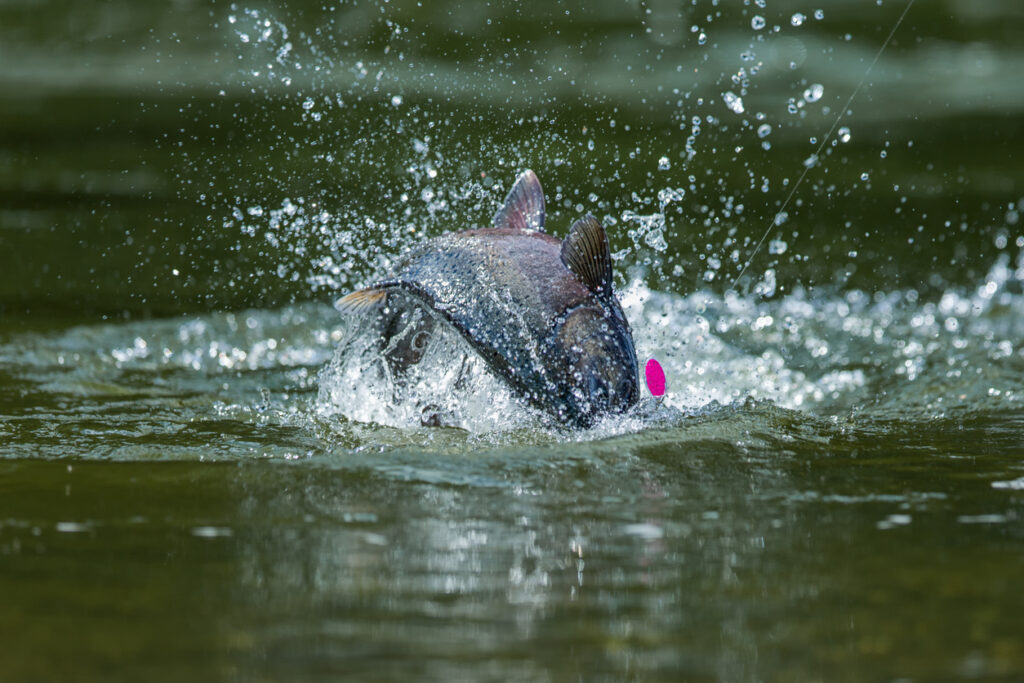 Photo by iStock
Why Marking Matters
Not all salmon populations are thriving. Many wild stocks – particularly some Chinook and coho populations – face pressures from habitat loss, climate change and changing ocean conditions.
Marked-select fisheries help address this by:
- Reducing impact on wild fish: Anglers must release unmarked (wild) salmon, allowing them to reach spawning grounds.
- Supporting hatchery programs: Harvest focuses on fish specifically produced to enhance fisheries.
- Maintaining fishing opportunity: Rather than full closures, anglers can continue to fish under selective regulations.
This approach has become especially important in southern BC, where conservation concerns for specific stocks – such as Fraser River Chinook – are high.
How Hatchery Marking Works
The marking process happens early in a salmon’s life. Juvenile fish are briefly anesthetized, and the adipose fin is clipped using automated systems capable of processing thousands of fish per hour. At the same time, many fish receive a coded-wire tag – a tiny piece of metal inserted into the snout that carries information about their origin.
These tags are later recovered in fisheries or on spawning grounds, providing valuable data on migration patterns, survival rates and fishery impacts.
The Angler’s Role
Marked-select fisheries rely heavily on angler compliance and care. Identifying a clipped adipose fin is usually straightforward, but proper handling of releasable fish is critical.
Best practices include:
- Minimizing handling and keeping fish in the water when possible
- Using barbless hooks to reduce injury
- Avoiding fishing in high water temperatures when release mortality increases
- Releasing wild fish quickly and without unnecessary stress
Anglers are not just participants – they are active partners in conservation.
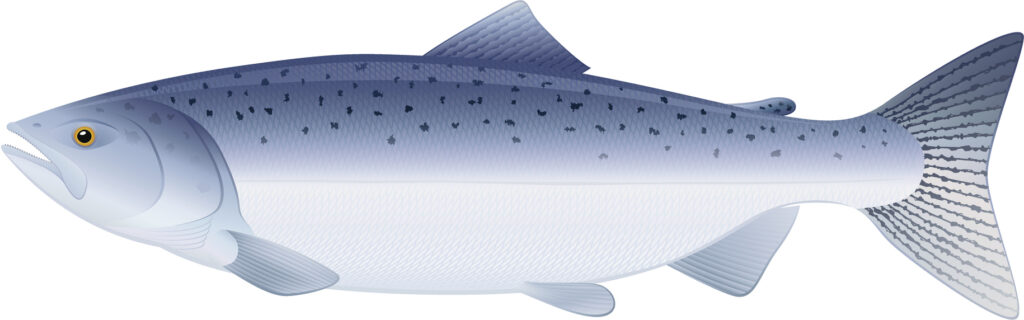 Photo by iStock
The adipose fin is located between the dorsal fin and the tail.
Challenges & Limitations
While marked-select fisheries are an effective tool, they are not without challenges.
- Release mortality: Not all released fish survive, particularly if improperly handled or caught in warm water.
- Incomplete marking: Not every hatchery fish is successfully clipped, which can complicate enforcement and harvest.
- Mixed-stock fisheries: In areas where multiple salmon populations overlap, even selective fisheries require careful management.
Fisheries managers must account for these factors when setting regulations, often adjusting seasons, areas and retention limits to stay within conservation targets.
A Tool For The Future
Marked-select fisheries are not a silver bullet, but they are a key part of modern fisheries management in British Columbia. By combining hatchery production, scientific monitoring and responsible angling, they offer a way to sustain both salmon populations and the fisheries that depend on them.
For anglers, the concept comes down to a simple check: clipped or not. But that small missing fin represents a much larger effort – one aimed at ensuring that wild salmon continue to return to BC’s rivers for generations to come.